One of the biggest milestones in early childhood is learning to become more independent. While academic skills are important, the daily routines children follow in a kindergarten class also help them build confidence, responsibility, and self-help skills.
According to the American Academy of Pediatrics, consistent routines support children’s self-regulation, confidence, and social-emotional development, making them an essential part of healthy learning and growth.
Understanding how these routines encourage independence can help parents choose a learning environment that prepares their children for success both in school and in everyday life.
Why Kindergarten Class Routines Matter
Every kindergarten class follows routines that help children know what to expect throughout the day. From arriving in the morning to cleaning up before going home, these predictable activities create a sense of security while encouraging children to become active participants in their own learning.
When children understand classroom expectations, they spend less energy wondering what comes next and more time focusing on learning. Predictable routines also reduce stress, making it easier for children to transition between activities and work independently with greater confidence.
Over time, these daily habits become valuable life skills that children carry with them both inside and outside the classroom.
Why Is Independence Important for Children?
Independence is much more than completing tasks without adult assistance. It helps children develop confidence in their own abilities, strengthens problem-solving skills, and encourages resilience when they encounter challenges.
When children learn to make simple decisions, complete age-appropriate responsibilities, and solve problems on their own, they begin to trust themselves. This confidence often leads to greater curiosity, increased willingness to try new activities, and stronger perseverance when learning becomes difficult.
Independent children also develop responsibility. They begin to understand that their actions have consequences and learn how to care for their belongings, respect shared spaces, and contribute to their classroom community.
These early experiences create a strong foundation for future academic success and personal growth.
Kindergarten Class Routines That Encourage Independence
Daily routines give children regular opportunities to practice independence in meaningful ways. A well-structured kindergarten class incorporates simple responsibilities throughout the day that help children build confidence, develop self-help skills, and take ownership of their learning.
1 | Morning Arrival Responsibilities
Children begin the day by unpacking their backpacks, hanging up their coats, and organizing their personal belongings without assistance.
Completing these tasks independently helps them transition smoothly into the school day while building organization and time-management skills. It also teaches children to take responsibility for their own materials instead of relying on adults.
2 | Classroom Jobs
Rotating classroom jobs help children understand that everyone has an important role in maintaining the learning environment.
Responsibilities such as watering plants, distributing supplies, organizing books, or serving as the line leader encourage accountability and teamwork. These tasks also teach children that contributing to a community benefits everyone.
Over time, regularly completing classroom jobs helps build confidence and a stronger sense of responsibility.
3 | Independent Learning Centers
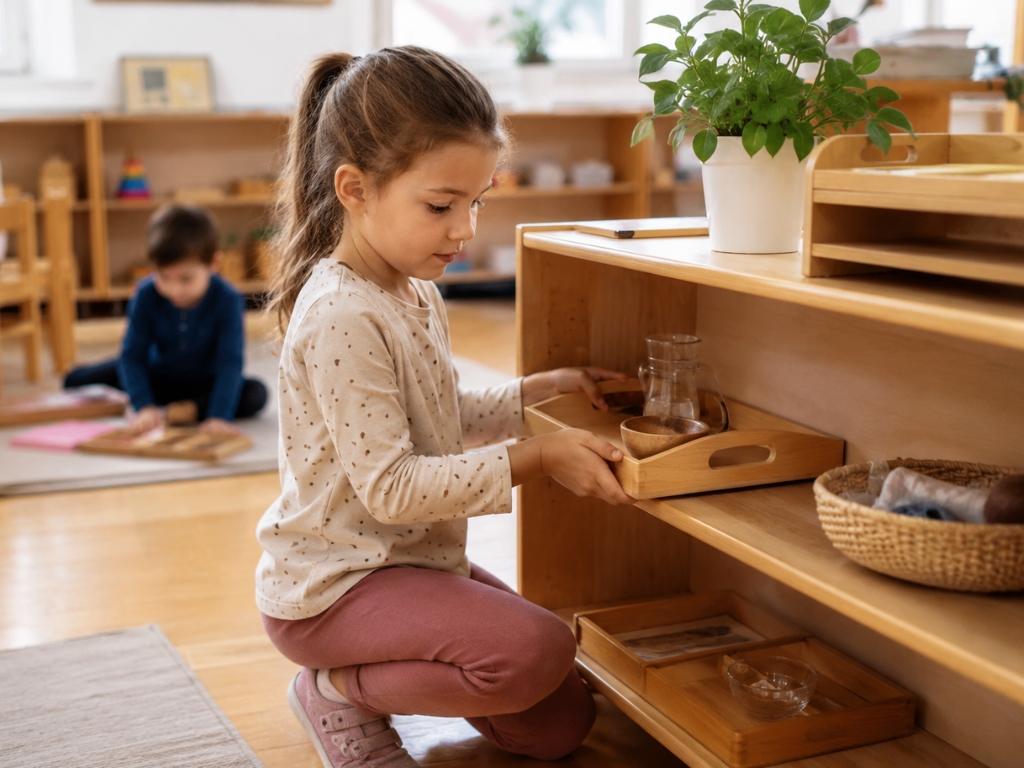
A well-designed kindergarten class gives children opportunities to choose activities that match their interests and developmental level. After selecting an activity, they are expected to complete it before returning the materials to their designated place.
This teaches children to make thoughtful decisions, stay focused on a task, and care for classroom resources. It also encourages self-directed learning by allowing children to take ownership of their work.
4 | Cleaning Up After Activities
Cleaning up is an important part of every learning activity, not just the final step. Returning materials to the correct location teaches children to respect shared resources and helps keep the classroom organized for everyone.
It also reinforces the idea that every task carries responsibility from beginning to end. These habits often carry over to home, where children become more willing to clean up after themselves.
5 | Snack and Lunch Routines
Snack and lunchtime provide valuable opportunities to practice everyday life skills. Children learn to open food containers, manage their belongings, clean up spills, and dispose of waste independently.
These simple tasks strengthen fine motor coordination while building confidence in handling everyday responsibilities. They also encourage children to become less dependent on adults during daily routines.
6 | Problem-Solving Before Asking for Help
Rather than immediately providing answers, teachers encourage children to think through challenges independently. They may ask guiding questions or suggest trying another strategy before offering assistance. This approach helps children develop critical thinking, persistence, and resilience when they encounter difficulties. Learning that mistakes are part of the process also builds confidence and a growth mindset.
7 | Following Multi-Step Directions
Many classroom activities require children to complete several steps in a specific order, such as gathering supplies, finishing an assignment, and putting materials away.
Following multi-step directions strengthens listening skills, working memory, and attention to detail. It also teaches children to complete tasks independently without constant reminders from the teacher.
8 | Transitioning Between Activities
Moving smoothly from one activity to the next is an important routine in a kindergarten class. Children learn to recognize classroom cues, finish their work appropriately, and prepare for the next lesson without becoming distracted.
Successful transitions improve self-regulation and help maximize learning time throughout the day. They also prepare children to adapt to changing schedules and new situations with greater confidence.
9 | Caring for Personal Belongings
Children are encouraged to take responsibility for their own jackets, backpacks, folders, water bottles, and classroom supplies. Remembering where items belong and keeping track of them teaches organization and accountability.
Instead of relying on adults to manage their belongings, children gradually become more self-sufficient. These habits help reduce forgotten items while building practical life skills they will use both in school and at home.
How Teachers Support Independence Without Doing Everything for Children
An effective kindergarten class gives children the guidance they need while encouraging them to complete tasks on their own. Instead of solving every problem immediately, teachers create opportunities for children to think independently, build confidence, and learn from experience. Some of the ways they support independence include:
- Modeling New Skills First: Teachers demonstrate how to complete a task before giving children the opportunity to practice it independently.
- Asking Guiding Questions: Instead of giving answers, teachers ask questions like, “What could you try next?” to encourage critical thinking and problem-solving.
- Giving Children Time to Try: Children are allowed to work through challenges before adults step in, helping them develop perseverance and resilience.
- Breaking Tasks Into Manageable Steps: Complex activities are introduced one step at a time, allowing children to build confidence as they master each stage.
- Encouraging Age-Appropriate Decision-Making: Children are given opportunities to choose activities, materials, or solutions, helping them develop responsibility and confidence in their own judgment.
- Treating Mistakes as Learning Opportunities: Teachers help children reflect on what happened and encourage them to try again rather than focusing on perfection.
- Gradually Reducing Support: As children become more capable, teachers intentionally step back so they can complete familiar tasks independently.
- Recognizing Effort and Persistence: Rather than praising only correct answers, teachers acknowledge determination, problem-solving, and improvement, reinforcing a growth mindset.
Help Your Child Grow With Confidence
Daily routines in a kindergarten class help children build independence, responsibility, and confidence that lasts beyond the classroom. At Quality Interactive Anthem Montessori, our hands-on approach encourages children to become capable, self-motivated learners every day. Contact us today to learn more or schedule a tour.