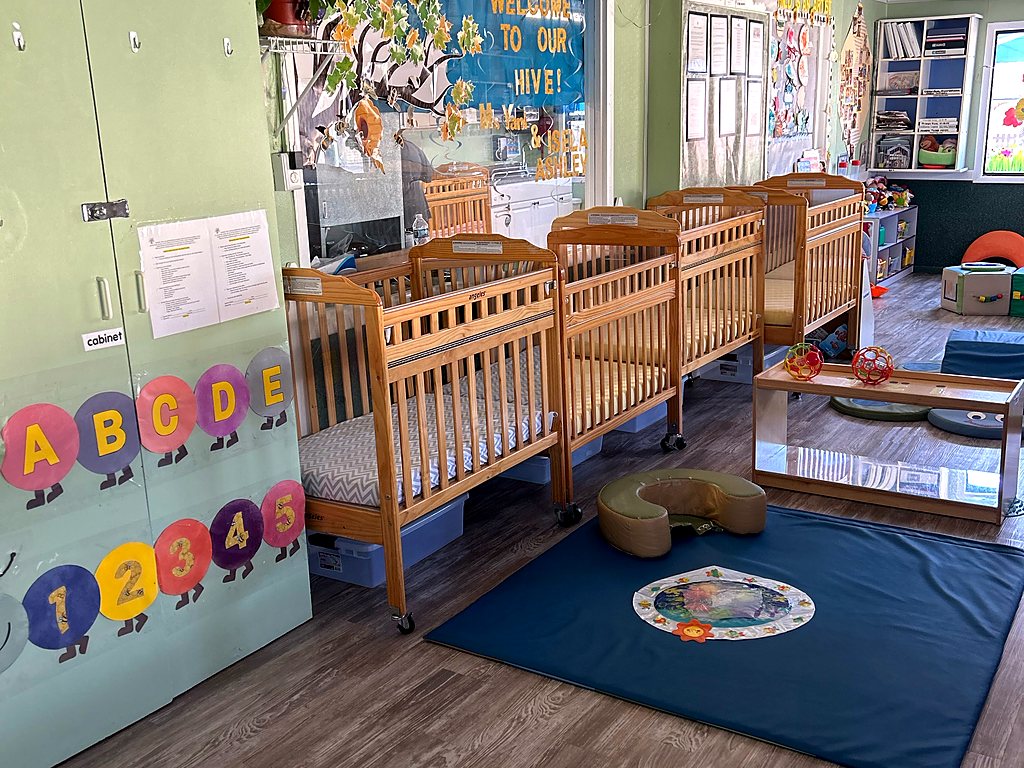

A “daycare near me” search can quickly become overwhelming. A convenient location and attractive classrooms may catch your attention, but choosing the right daycare requires looking more closely at how children are supervised, supported, taught, and cared for throughout the day.
An in-person visit gives you an opportunity to see beyond a website or brochure. As you tour each daycare, pay attention to the environment, watch how teachers interact with children, and ask questions about everyday routines.
Use this 10-point checklist to make your daycare visits more focused and compare your options with greater confidence.
1. Ask About Teacher-to-Child Ratios
Start by asking how many children are typically assigned to each teacher. Smaller groups can make it easier for caregivers to respond to individual needs, supervise activities, and build meaningful relationships with children.
Ask whether ratios change throughout the day, especially during drop-off, pickup, meals, outdoor play, or staff breaks. You should also confirm that the daycare follows applicable state licensing requirements for your child’s age group.
2. Observe the Classroom Environment
When touring a daycare near me, look closely at the classrooms. Are they clean, organized, welcoming, and appropriate for the ages of the children using them?
Look for accessible toys, books, art materials, learning centers, and comfortable spaces for quiet activities. A well-planned classroom should give children opportunities to explore while allowing teachers to supervise effectively.
3. Learn the Daily Routine
Ask the staff to walk you through a typical day. Young children often benefit from predictable routines that balance structured activities with opportunities for play and rest.
According to the National Association for the Education of Young Children, early childhood educators should provide predictable, consistent routines while allowing flexibility to meet children’s individual needs. These routines can support children’s learning, self-regulation, and sense of security.
Find out when children eat, nap, play outside, participate in group activities, and engage in independent exploration. Ask how flexible the schedule is when a child needs additional rest, comfort, or time to adjust.
4. Check Entry and Pickup Procedures
Safety begins before you enter the classroom. Ask how the daycare controls building access and prevents unauthorized visitors from entering.
Find out how children are signed in and out, who is permitted to pick them up, and how staff verify unfamiliar adults. If the facility uses secured entrances, codes, cameras, or other security measures, ask how those systems work.
5. Look at Indoor and Outdoor Safety
As you tour the facility, notice whether walkways are clear and potentially hazardous materials are stored securely. Ask about childproofing, emergency exits, fire drills, first-aid procedures, and staff training.
Don’t forget the playground. Outdoor equipment should be appropriate for the children’s ages, and staff should be able to explain how outdoor play is supervised.
6. Ask About Illness and Emergency Policies
Before selecting a daycare near me, understand how the center handles illness, injuries, medications, allergies, and emergencies.
Ask when sick children are required to stay home and how parents are contacted if a child becomes ill during the day. Parents of children with allergies or medical needs should also discuss how individual care instructions are communicated to staff.
7. Explore the Learning Approach
Daycare involves more than keeping children occupied until pickup. Ask how teachers encourage language development, social-emotional skills, creativity, movement, problem-solving, and age-appropriate independence.
For younger children, learning may happen primarily through play, songs, stories, sensory experiences, and everyday interactions. The goal is not necessarily a highly academic schedule, but a thoughtful environment that supports development.
8. Watch Teacher-Child Interactions
One of the most revealing parts of a daycare visit may be simply observing the room. Notice how teachers speak to children. Are they patient, attentive, encouraging, and responsive?
Pay attention to how staff comfort an upset child, redirect challenging behavior, answer questions, and join children’s activities. These everyday interactions can tell you a great deal about the daycare’s overall approach to care.
9. Ask How Parents Receive Updates
Strong communication can make the transition to daycare easier for both children and parents. Ask how teachers share information about meals, naps, activities, behavior, and developmental progress.
Some centers use apps or digital reports, while others provide written updates or communicate directly at pickup. More important than the method is whether communication is consistent, useful, and easy for families to access.
10. Discuss Staff Experience, Turnover, and Accreditation
Finally, ask about the people who will spend each day with your child. Find out what training teachers receive, how new employees are prepared for the classroom, and whether staff participate in continuing education.
It is also worth asking whether the daycare holds accreditation from a recognized early childhood education organization. Accreditation typically involves meeting standards that go beyond basic licensing requirements and may evaluate areas such as teaching practices, staff qualifications, family relationships, health and safety, and program leadership.
Staff stability matters, too. Ask about turnover and how the daycare works to provide children with consistent caregivers, familiar routines, and dependable relationships.
Choosing the Right Daycare Near Me
After each visit, take notes and compare important factors such as safety, routines, learning activities, communication, hours, and overall environment. The right daycare near me should fit your family’s practical needs while providing a place where your child can feel comfortable, supported, and engaged.
If you’re exploring daycare options for your child, consider visiting Small Miracles Education. Schedule a tour to meet the team, explore the learning environment, and see whether Small Miracles Education is the right fit for your family.