
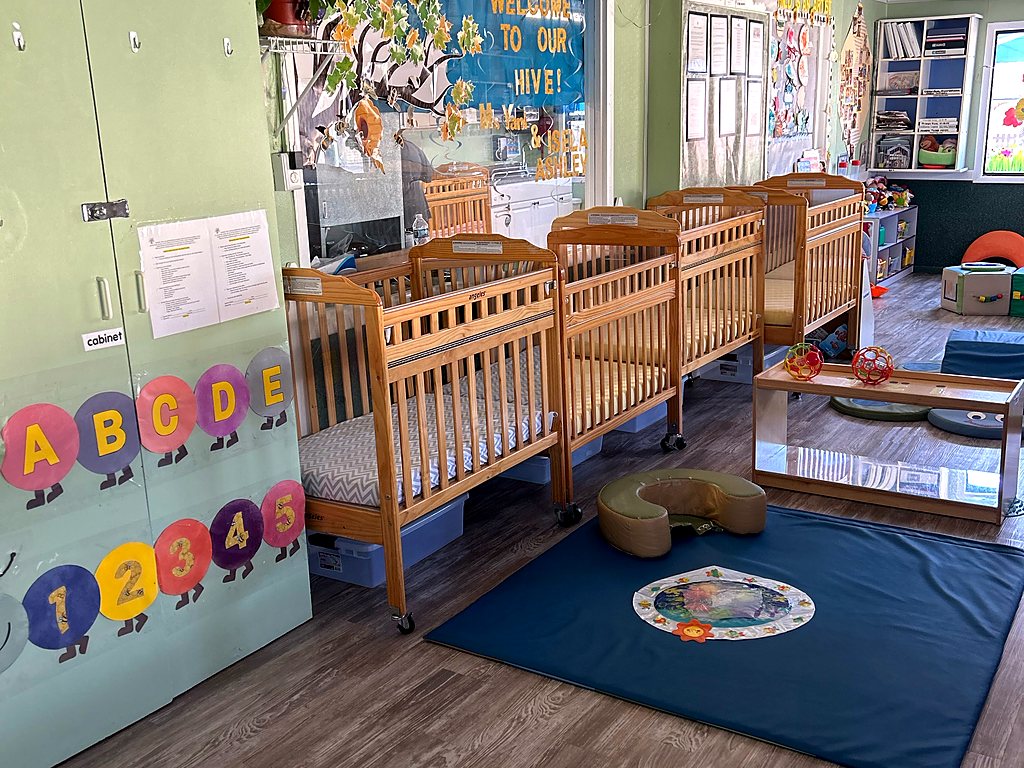
A great infant room and a great preschool classroom look nothing alike. One is quiet, soft and built around each baby’s own schedule. The other is busy, social and full of blocks, books and big questions. If you are comparing daycare in Tucson, the most useful thing you can do is tour each room with the right checklist for your child’s age.
This guide walks you through each age group, from 6-week-old babies to pre-K. It covers what Arizona requires, what quality programs add on top, and the questions worth asking on every tour.
Quick Answer: What to Look For at Each Age
| Age group | Arizona minimum staff-to-child ratio | What a quality room should show you |
|---|---|---|
| Infants (up to 12 months, or 18 months if not yet walking) | 1:5, or 2 adults for 11 babies | Individual cribs, plenty of floor time, caregivers who hold, talk and respond quickly |
| 1-year-olds | 1:6, or 2 adults for 13 children | Safe space to move, simple choices, words for everything, toilet learning only when ready |
| 2-year-olds | 1:8 | Predictable routines, early friendship skills, art, music and lots of language |
| 3-year-olds | 1:13 | Learning centers, pretend play, early literacy and math through play |
| 4-year-olds | 1:15 | Kindergarten readiness: independence, problem-solving, letters, numbers and self-control |
Ratios are the minimums set by the Arizona Department of Health Services in its child care facility rules (R9-5-404). A licensed center must base each group’s ratio on the youngest child in the group, so a room that mixes 2- and 3-year-olds has to staff it like a room of 2-year-olds.
Why Daycare Looks So Different at Each Age
Young children change fast. In the first five years, a baby who can only lift their head becomes a 4-year-old who can tell stories, take turns and solve problems. A good program changes the room, the routine and the adult’s role to match each stage.
That is why the “best” daycare for an 8-month-old might not be the best fit for an energetic 3-year-old. When you tour, ask to see the exact room your child will join, not just the lobby or the preschool classroom.
What Should an Infant Room at a Tucson Daycare Look Like?
The infant room is where quality matters most, because babies cannot tell you how their day went. Arizona’s rules for infant rooms are detailed, and they give you a ready-made checklist.
Safe sleep, every time
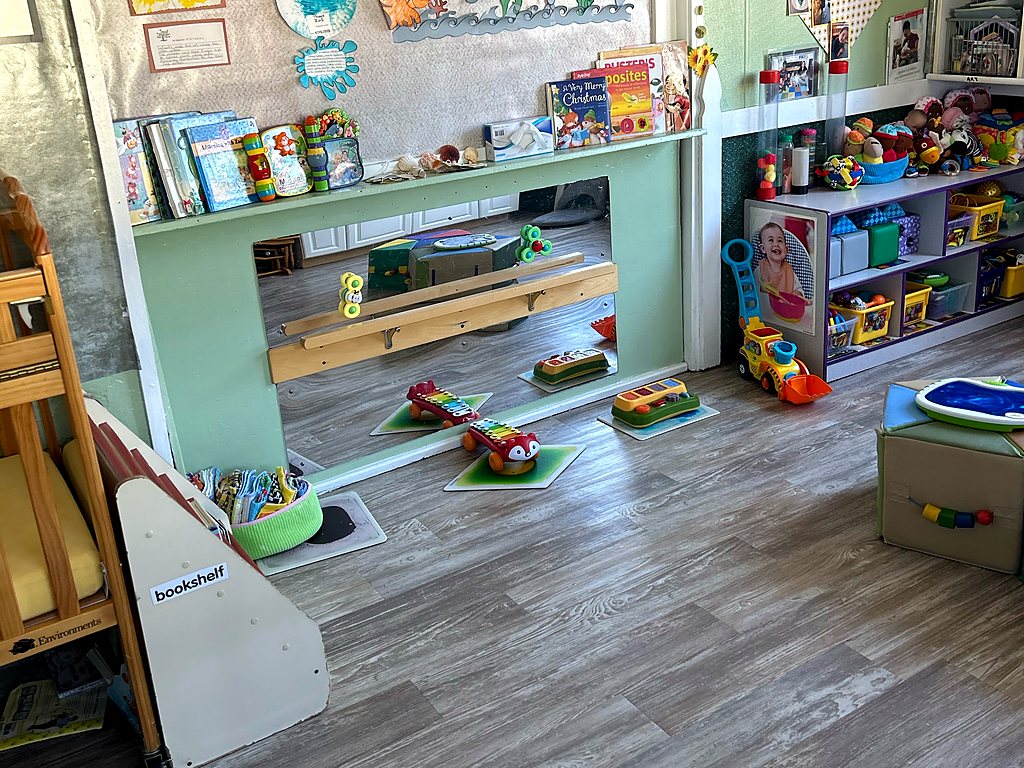
- Each baby has their own crib. Arizona requires a crib for each infant and prohibits stacked cribs.
- Back to sleep, with nothing in the crib. Staff must place babies on their backs to sleep unless a doctor gives written instructions otherwise, and bumper pads, pillows, comforters and stuffed toys are not allowed in the crib while a baby is in it. This matches the American Academy of Pediatrics’ safe sleep guidance.
- Your baby’s own rhythm. Licensed centers must let infants keep their own pattern of sleeping and waking, so ask how the room handles a baby who naps at different times from the others.
Lots of floor time, very little “container” time
Babies learn by reaching, rolling, crawling and pulling up. In Arizona, an awake infant cannot be kept in a crib, swing, bouncy seat or high chair for more than 30 minutes in a row, walkers are not allowed, and screen time is banned in infant rooms. Look for open floor space, soft mats, unbreakable mirrors, board books and toys to grasp, stack and pull. Non-crawling babies should get supervised tummy time every day.
Caregivers who talk, hold and respond
Watch the adults more than the toys. Are caregivers on the floor with the babies? Do they talk and sing during diaper changes and feedings? Arizona requires infant staff to play and talk with each baby, hold and rock them, and respond immediately to distress. The federal Childcare.gov “Look, Listen, and Ask” checklist says the same thing: children this age should spend most of their time playing on the floor with an engaged adult close by.
Feeding and daily notes
- Bottles should be labeled with your baby’s name and never heated in a microwave or propped up for feeding.
- The center should get written feeding instructions from you and follow them. In Arizona, these are posted in the infant room and the kitchen.
- You should get a daily record of what your baby ate, diaper changes, activities and tummy time. Ask how you receive it: on paper, by app or at pickup.
Ask on your tour: “Who would be my baby’s main caregiver, and how long have they worked in this room?” Consistent caregivers help babies form the secure attachments that everything else builds on.
How Do Toddler Programs Build Routines and Language?
Toddlers are explorers with big feelings and a fast-growing vocabulary. Arizona sets a minimum of one adult for every six 1-year-olds and one for every eight 2-year-olds. A strong toddler room balances freedom to move with routines your child can predict.
What a good toddler room includes
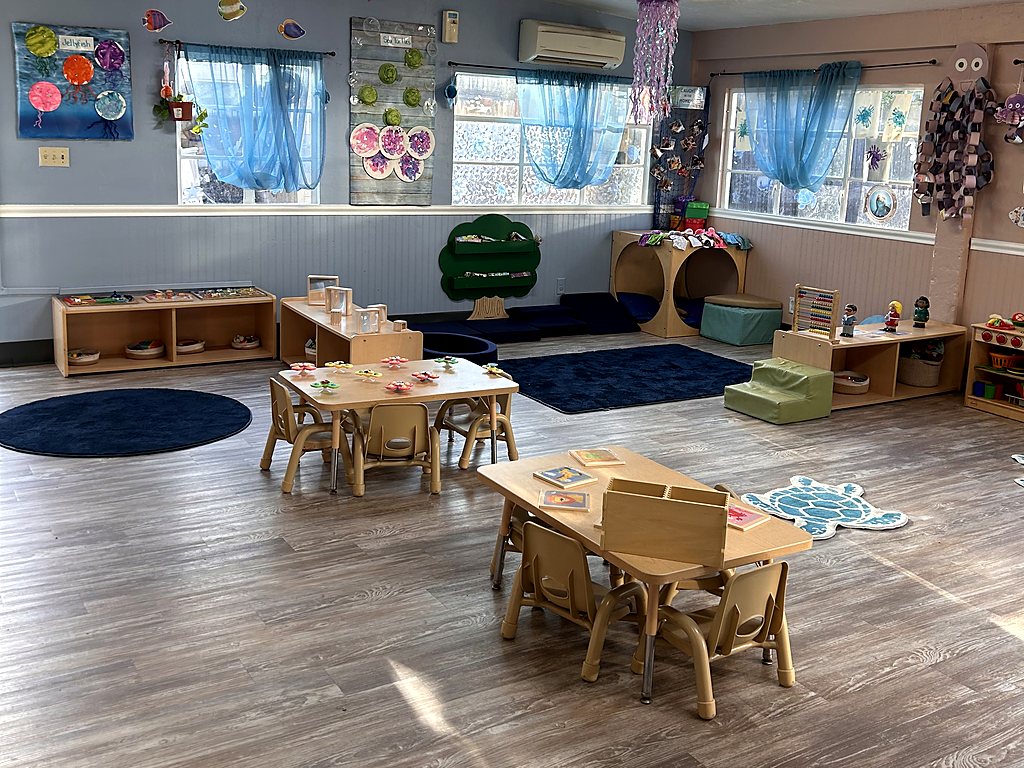
Arizona lists the materials toddler rooms must have: art supplies, books, soft balls, puzzles, blocks, washable dolls, musical instruments and equipment for climbing and running. Look for these on low, open shelves where children can choose for themselves. Screen time is not allowed in rooms that care for 1-year-olds.
Everyday routines become lessons
The best toddler teachers narrate everything. “You’re washing your hands. Bubbles on the top, bubbles on the bottom!” Arizona’s rules specifically ask staff to use naps, meals, diapering and toileting as chances to build language. Listen for this on your tour.
Toilet learning on your child’s timeline
Licensed centers must create an individual toilet training plan with each family and cannot force toilet training. Ask how teachers work with you at home and at school so your child gets the same message in both places. Our guide to how Tucson preschools handle potty training, naps and separation anxiety goes deeper on this stage.
Ask on your tour: “How do teachers handle biting, grabbing and toddler meltdowns?” You want to hear calm redirection and coaching, not punishment.
What Changes When a Child Moves Into Preschool?
Around age three, children are ready for more independence, friendships and structured learning, delivered through play. Arizona’s minimum ratios widen to 1:13 for 3-year-olds and 1:15 for 4-year-olds, so ask each center how many children are actually in the room and how many teachers you will see on a typical day.
Learning centers with a purpose
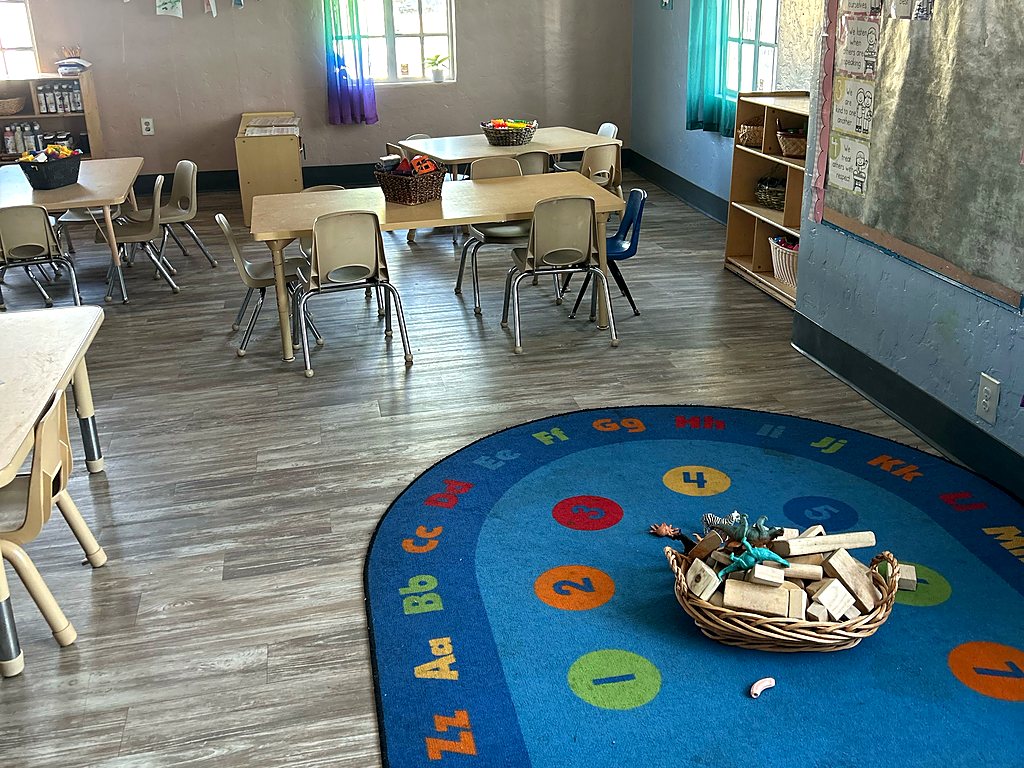
A preschool room should be organized into areas for blocks, books, art, pretend play, science and music. Each one builds real skills. Block play teaches early math and teamwork. Pretend play builds language and empathy. Art strengthens the hand muscles children later use to write.
Kindergarten readiness without the pressure
Ask how teachers prepare children for kindergarten. You want to hear about independence, following directions, managing feelings, early letters and numbers, and problem-solving, not worksheets all day. At Small Miracles, teachers plan for each child’s needs, whether that is learning to hold a pencil, writing their name or working through a conflict with a friend.
Smooth transitions between rooms
Moving up is a big step. Ask how the center decides when a child is ready for the next room, whether children visit before they move, and how teachers share notes with the new team.
How Do Tucson Daycares Use the Cooler Months for Outdoor Learning?
Tucson’s weather shapes the daily schedule. From late fall through spring, mild days make it the best season for long stretches of outdoor play, gardening, nature walks and messy art outside. In the hottest months, quality programs move outdoor time to the early morning, use shade structures and keep water close by.
On your tour, look at the playground as closely as the classrooms:
- Is there shade over play equipment and sand areas?
- Is there a separate, age-appropriate space for babies and toddlers? Arizona requires centers to give babies an outdoor area (or an indoor space for big movements) that they use when older children are not there.
- How does the schedule change on very hot days?
What Should Parents Ask About Ratios, Meals and Naps?
Bring this short list to every Tucson daycare tour:
- Ratios: “What is the actual ratio in my child’s room, and how do you cover breaks, drop-off and pickup?”
- Staffing: “How long have the lead teachers been here?”
- Meals: “Are meals and snacks included? Can I see a menu? How do you handle allergies?”
- Naps: “Where does my child sleep, and what happens if they don’t nap?”
- Communication: “How will I hear about my child’s day?”
- Safety: “How do you control who enters the building and who can pick up my child?”
- Quality: “Do you participate in Quality First, and are you nationally accredited?”
You can also look up any center’s license and inspection history on the Arizona Department of Health Services AZ Care Check website. For a full side-by-side comparison tool, use our 10-point daycare checklist.
How Much Does Daycare Cost in Tucson, and Is There Help Paying?
Price usually follows ratios: the younger the child, the more adults the room needs, so infant care costs the most. Statewide, Child Care Aware® of America reports that full-time center care in Arizona averaged $15,964 a year for an infant and $13,390 for a toddler in 2024, with care for a 4-year-old averaging $11,680. Rates at individual Tucson centers vary by neighborhood, age and schedule, so always ask for a written breakdown of tuition and fees.
Tucson families have several ways to lower the cost:
- DES Child Care Assistance. The Arizona Department of Economic Security helps eligible working families with children under 13, generally with income at or below 165% of the federal poverty level. Funding is limited and most families are placed on a waiting list, so apply early through the DES Child Care Assistance program.
- Pima County PEEPs scholarships. Pima Early Education Program Scholarships help many families with 3- and 4-year-olds (and 5-year-olds not yet in kindergarten). In 2026, many families qualify with household income up to 300% of the federal poverty level, which is $99,000 for a family of four.
- Quality First Scholarships. First Things First funds a limited number of scholarships for children from birth to age five, offered through participating programs. Ask each center whether scholarships are currently available.
- Center discounts. All Small Miracles locations accept DES child care subsidies, and we offer military and sibling discounts.
How Do You Schedule a Tour at a Small Miracles Tucson Location?
Small Miracles Education has been caring for Arizona children since 1980 and runs 10 schools across Tucson:
- El Presidio Day School, downtown’s historic district
- Little Ranch Preschool, on East Glenn Street in central Tucson
- Love This Day School, on East 29th Street
- Miramonte Day School, near Reid Park Zoo
- Old Spanish Trail School, on the east side
- Open Arms School, in northwest Tucson
- Outer Limits School, on Fort Lowell Road
- Pima Country Day School, on East Pima Street
- Poets Square Day School, near Tucson Mall
- Three Points Child Care Center, on Ajo Highway in Three Points, southwest of Tucson
Every Tucson school enrolls children from 6 weeks old through preschool, and most also offer before- and after-school care for school-age children. All 10 participate in Quality First, Arizona’s quality improvement and rating program, and many are nationally accredited. Families stay connected through our WatchMeGrow® family app, which includes live classroom video, and meals and snacks are prepared with nutritious ingredients through the CACFP food program.
Booking a visit is simple:
- Find the school closest to your home or work on our Tucson locations page.
- Schedule a tour online, or just drop in. Walk-ins are always welcome.
- Bring the checklist above and ask to see the room your child would join.
- When you’re ready, follow our simple enrollment steps.
Frequently Asked Questions
How early can a baby start daycare in Tucson?
Many licensed Tucson centers accept babies from 6 weeks old. Every Small Miracles school in Tucson enrolls infants from 6 weeks. In Arizona, a child counts as an infant until 12 months, or until 18 months if they are not yet walking.
What is the ratio for infants in Arizona daycare centers?
Arizona requires at least one staff member for every five infants, or two staff members for every 11 infants, at all times.
Does Arizona have free child care?
Arizona does not have universal free child care, but help is available. DES Child Care Assistance, Pima County PEEPs scholarships, Quality First Scholarships and Head Start or Early Head Start programs can reduce or cover the cost for eligible families.
How do I check if a Tucson daycare is licensed?
Search the center’s name on AZ Care Check, the Arizona Department of Health Services website for licensed child care facilities. It shows licensing history, including any deficiencies found during inspections and the provider’s plan to correct them.
Find the Right Room for Your Child
The right daycare in Tucson is the one where your child’s room fits their age and stage: safe, warm and responsive for babies, rich in words and movement for toddlers, and playful but purposeful for preschoolers. Tour more than one room, trust what you see in the interactions, and ask every question on your list.
Small Miracles Education would love to show you around. Find your nearest Tucson school and schedule a tour to meet our teachers and see our infant, toddler and preschool rooms in person.