
When parents search for the right preschool, academics often take center stage. It’s natural to ask about reading readiness, math activities, and classroom structure. But another skill deserves just as much attention: emotional intelligence.
Emotional intelligence helps children understand their feelings, communicate effectively, build friendships, and respond to challenges in healthy ways. These abilities shape how children learn, interact with others, and adapt to new environments.
If you’re evaluating an Arizona preschool, it’s worth asking whether the program supports emotional development alongside academic growth. Here’s what to look for.
What Is Emotional Intelligence in Early Childhood?
Emotional intelligence is the ability to recognize, understand, express, and manage emotions while showing empathy toward others. During the preschool years, children begin developing these lifelong skills through daily experiences.
A child with growing emotional intelligence can:
- Identify and talk about their feelings.
- Understand how their actions affect others.
- Manage frustration more effectively.
- Solve simple conflicts with classmates.
- Build positive relationships with teachers and peers.
These skills don’t develop overnight. They require consistent guidance, encouragement, and opportunities to practice.
According to the National Association for the Education of Young Children (NAEYC), children with higher emotional intelligence are better able to pay attention, engage in learning, build positive relationships, and regulate their behavior. These skills contribute to both academic success and overall well-being.
Signs Your Arizona Preschool Prioritizes Emotional Intelligence
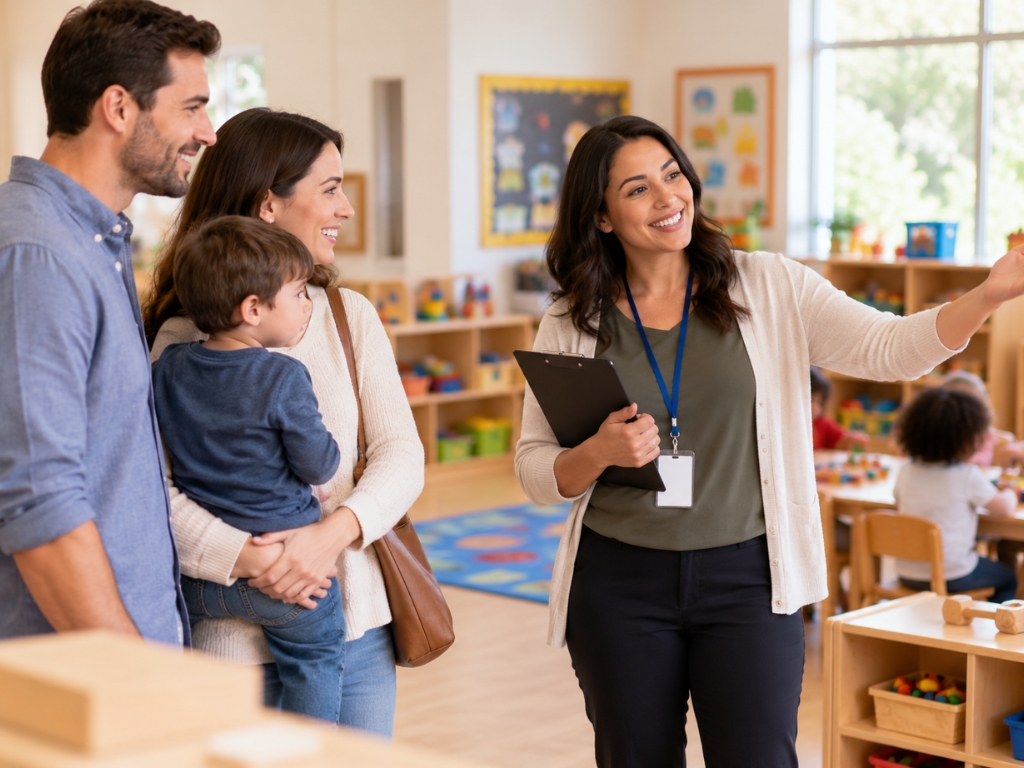
Not every preschool approaches social-emotional learning the same way. As you tour classrooms, look beyond the curriculum and observe how teachers interact with children. A strong emotional learning environment is often reflected in everyday routines and conversations.
- Teachers calmly acknowledge children’s feelings.
Instead of dismissing emotions or immediately correcting behavior, teachers recognize what a child is feeling and help them express it appropriately. For example, a teacher might say, “I can see you’re frustrated. Let’s figure this out together.” This approach teaches children that emotions are normal and manageable. - Classrooms encourage respectful communication.
Children are encouraged to use kind words, listen when others are speaking, and express their needs respectfully. Teachers model positive communication and help children understand the importance of empathy and active listening during daily interactions. - Children work together during play and group activities.
Collaborative activities give children opportunities to practice sharing, taking turns, solving problems, and working toward common goals. These experiences strengthen teamwork and help children learn how to navigate social situations. - Mistakes are treated as learning opportunities.
Rather than criticizing mistakes, teachers encourage children to try again and learn from the experience. This helps build resilience, confidence, and a growth mindset, allowing children to view challenges as opportunities to improve. - Daily routines create a sense of security and predictability.
Consistent schedules help children know what to expect throughout the day, reducing anxiety and making transitions easier. Feeling safe and secure allows children to focus on learning, exploring, and building positive relationships.
Many quality preschool programs also incorporate activities that naturally build emotional intelligence, including storytelling, role-playing, cooperative games, and classroom discussions about feelings. These activities help children recognize emotions, understand different perspectives, and practice positive social behaviors in realistic situations.
Over time, these everyday experiences help children develop empathy, patience, communication skills, and problem-solving abilities that support both their academic success and personal growth.
How Emotional Intelligence Supports Kindergarten Readiness
Kindergarten readiness involves much more than recognizing letters, numbers, shapes, and colors. Children also need emotional skills that help them follow classroom routines, listen to instructions, cooperate with classmates, and handle moments of frustration.
When preschoolers can name their feelings and understand simple expectations, they are better prepared to participate in group learning.
Strong emotional intelligence also helps children adapt to new routines, build friendships, and keep trying when tasks feel difficult.
When emotional and academic development work together, children often enter kindergarten with greater confidence, independence, and a stronger ability to engage with teachers and peers.
Questions Parents Should Ask When Visiting an Arizona Preschool
Choosing the right Arizona preschool means looking beyond brochures and classroom decorations. Ask questions that reveal how the school supports children’s emotional development. Strong answers should include specific examples rather than general promises.
- How do teachers help children handle frustration?
Look for an answer that emphasizes coaching children through emotions, encouraging problem-solving, and teaching calming techniques instead of relying solely on punishment or time-outs. - How are conflicts between classmates resolved?
A quality preschool should explain how teachers guide children to communicate, listen to one another, and work toward solutions rather than simply separating them. - What activities encourage empathy and cooperation?
Expect examples such as cooperative games, group projects, role-playing, storytelling, or classroom discussions that help children understand others’ feelings. - How is social-emotional learning incorporated into the daily schedule?
The best programs weave emotional learning into everyday routines through circle time, play, classroom interactions, and teacher guidance instead of treating it as an occasional lesson. - How do teachers communicate a child’s emotional progress with families?
Look for regular updates through conferences, daily reports, or informal conversations that keep parents informed about their child’s social and emotional growth.
The answers should demonstrate that the preschool intentionally develops emotional intelligence alongside academic skills, giving children a strong foundation for kindergarten and beyond.
Ways Parents Can Build Emotional Intelligence at Home
Emotional learning doesn’t end when preschool dismisses for the day. Parents play an important role in reinforcing these skills at home. Simple habits can make a meaningful difference:
- Talk openly about emotions during everyday conversations.
- Read books that explore different feelings.
- Model calm responses during stressful situations.
- Encourage children to solve small problems independently.
- Praise acts of kindness, patience, and empathy.
These daily interactions strengthen the lessons children learn in preschool and help them apply emotional skills in different environments.
What Are Calming Strategies for Preschoolers?
Young children experience big emotions, but they often need help learning how to manage them. Effective preschool programs teach calming strategies that children can use when they feel overwhelmed. Common techniques include:
- Taking slow, deep breaths.
- Counting to ten.
- Spending a few quiet moments in a calming space.
- Using sensory tools when appropriate.
- Naming emotions before reacting.
Rather than immediately correcting behavior, skilled teachers guide children through these strategies and help them understand what they’re feeling.
With regular practice, children learn that emotions are normal and manageable. This confidence carries into future classrooms, friendships, and everyday situations.
Give Your Child a Strong Foundation for Life
If you’re looking for an Arizona preschool that values the whole child’s development, Old Spanish Trail School provides an environment where emotional growth is nurtured alongside academic learning.
Through supportive teacher relationships, collaborative activities, and age-appropriate social-emotional experiences, children develop the confidence, empathy, and resilience they need to thrive in kindergarten and beyond.
After all, one of the greatest gifts a preschool can offer is helping children understand themselves while learning to connect with others. Contact Old Spanish Trail School today to learn how its child-centered approach helps build a strong foundation for lifelong success.