Parents often want learning to feel natural, meaningful, and supportive. Montessori classrooms make that possible by giving children space to grow at their own pace while learning essential life skills.
Montessori education is a long-standing educational approach grounded in independence, exploration, and respect for each child’s development.
Below are 12 key benefits of Montessori education and why so many parents continue to choose this learning style.
1. Children can learn at their own pace.
Montessori removes the pressure of keeping up with a rigid timeline. In traditional classrooms, lessons move forward whether or not every child is ready.
Montessori reverses that thinking. Children spend more time on skills that need practice and move ahead when they’ve truly mastered something.
This pacing helps children build confidence in themselves as learners. They don’t just memorize information; they understand it. Parents often notice that this reduces stress and makes learning feel more joyful and natural.
2. Hands-on experiences make learning meaningful.
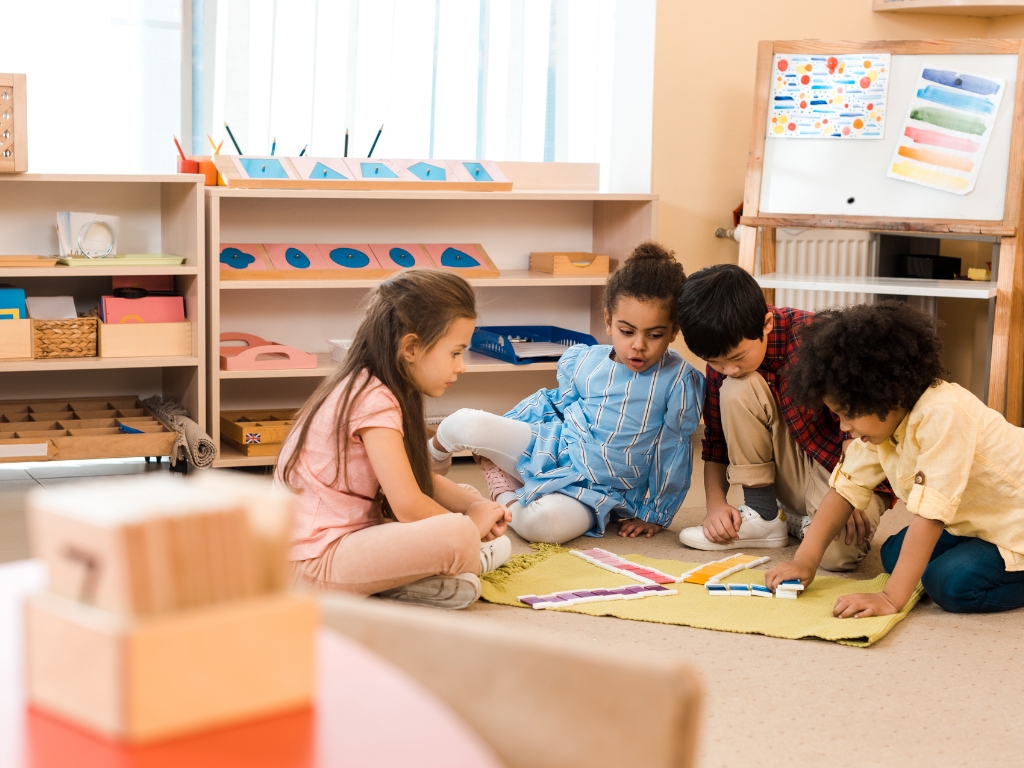
Montessori learning isn’t passive. Children don’t sit and listen for long stretches. Instead, they interact with materials that turn ideas into real experiences.
Math becomes beads they can count and organize. Language becomes letters they can trace. Science becomes objects they can sort, observe, and explore.
When children can touch and manipulate materials, they gain a deeper understanding of concepts. They remember lessons better, stay more engaged, and feel more connected to what they’re learning.
3. Independence becomes part of everyday life.
Montessori classrooms are set up to help children do things for themselves. Everything is placed where they can reach it, use it, and put it away without constant adult help.
When children choose their own work, manage their own tools, and clean up after themselves, independence becomes a natural habit. This builds real self-confidence because children see themselves as capable.
Many parents notice their child becoming more responsible at home, especially in choosing clothes, helping with simple tasks, and showing pride in doing things on their own.
4. Teachers guide rather than direct.
In Montessori, teachers take on a different role than what you may have experienced in school. Instead of standing at the front of the room leading every moment, they observe quietly. They learn how each child thinks, what interests them, and what challenges them.
When the time is right, the teacher introduces new lessons one-on-one or in small groups. Then they step back and allow the child to explore.
This approach teaches children how to think independently, solve problems, and trust their own judgment. It also creates a classroom atmosphere that feels calmer and more respectful.
5. Children develop strong concentration skills.
Montessori classrooms allow for long, uninterrupted periods of work. Children can choose an activity and stay with it for as long as they want, without being told to stop because the schedule has shifted.
This freedom helps them develop real concentration. They learn how to settle into a task, work through challenges, and finish what they started.
You often see this carry over at home, where children spend more time reading, building, drawing, or exploring without getting distracted as easily.
6. Mixed-age classrooms support natural learning.
Montessori groups children in multi-age communities. Younger children learn by watching older classmates, and older children reinforce their knowledge by helping younger ones.
This structure mirrors real life, where people of different ages learn from each other every day. It creates a stronger sense of belonging and cooperation.
Children feel comfortable asking questions, offering help, and taking on leadership roles. This type of social learning builds confidence and empathy in a way same-age groups rarely do.
7. Practical life skills become important learning moments.
One thing parents often notice right away in Montessori is how much time children spend on practical tasks, such as pouring water, wiping tables, organizing materials, preparing food, caring for plants.
These activities are not treated as chores. They are part of the curriculum because they build coordination, focus, and responsibility. Children learn to manage real tasks with care and pride.
Over time, these skills help them build self-discipline and a stronger sense of independence that benefits them far beyond the classroom.
8. Creativity grows without pressure or overstimulation.
Montessori classrooms are intentionally calm. Instead of bright walls and loud visuals, you’ll see simple materials and plenty of open space. This helps children focus on their own ideas.
Creativity doesn’t come from being overwhelmed with choices; it comes from being given room to think, explore, and experiment.
Montessori children create because they want to, not because it’s an assignment. They develop confidence in their creative thinking and feel comfortable trying new ideas without fear of mistakes.
9. Children develop internal motivation.
Montessori avoids the prize-and-punishment model you see in many classrooms. There are no sticker charts, no reward boxes, and no “great job!” every five minutes. Instead, children feel proud because they accomplished something meaningful. The motivation comes from the work itself.
When a child successfully completes a task, they feel it internally, and that feeling becomes their source of motivation. This helps them build resilience and a strong work ethic that lasts well beyond early childhood.
10. Emotional development is part of the curriculum.
Montessori intentionally teaches grace, courtesy, empathy, and emotional awareness. Children learn how to express themselves respectfully, navigate conflict calmly, and treat others with kindness.
Teachers model these behaviors every day, and children naturally adopt them. The classroom operates as a small community, where everyone has a role in maintaining peace and cooperation.
Families often notice that their children become more patient, understanding, and thoughtful with siblings and friends.
11. Children develop a true love of learning.
Montessori nurtures curiosity. Instead of telling children what to learn, the environment encourages them to explore what interests them.
When children feel ownership over their learning, they stay engaged and enthusiastic. They begin to ask more questions, try new things, and develop a healthy relationship with education.
This love of learning becomes a long-term advantage. It prepares them to enter elementary school with curiosity and confidence.
12. Montessori builds strong foundations for later academic success.
Because Montessori focuses on critical thinking, problem-solving, independence, and concentration, children enter later school years with skills that set them up for success.
They’re comfortable working alone and with others. They know how to manage classroom routines. They transition smoothly because they already possess the habits required in elementary school settings.
Parents often notice that these early skills continue to support their children as academic expectations grow.
Is Montessori the right fit for your family?
Montessori offers a learning experience that supports the whole child: academically, socially, and emotionally. When you look closely at the many benefits of Montessori education, it becomes clear why so many families choose this approach. It nurtures independence, curiosity, confidence, and respect, all while giving children the freedom to grow into their best selves.
If you’re ready to see how Montessori learning can help your child thrive, schedule a tour with Quality Interactive Preschool & Montessori today. Our team is here to answer your questions and help you explore the right fit for your family.