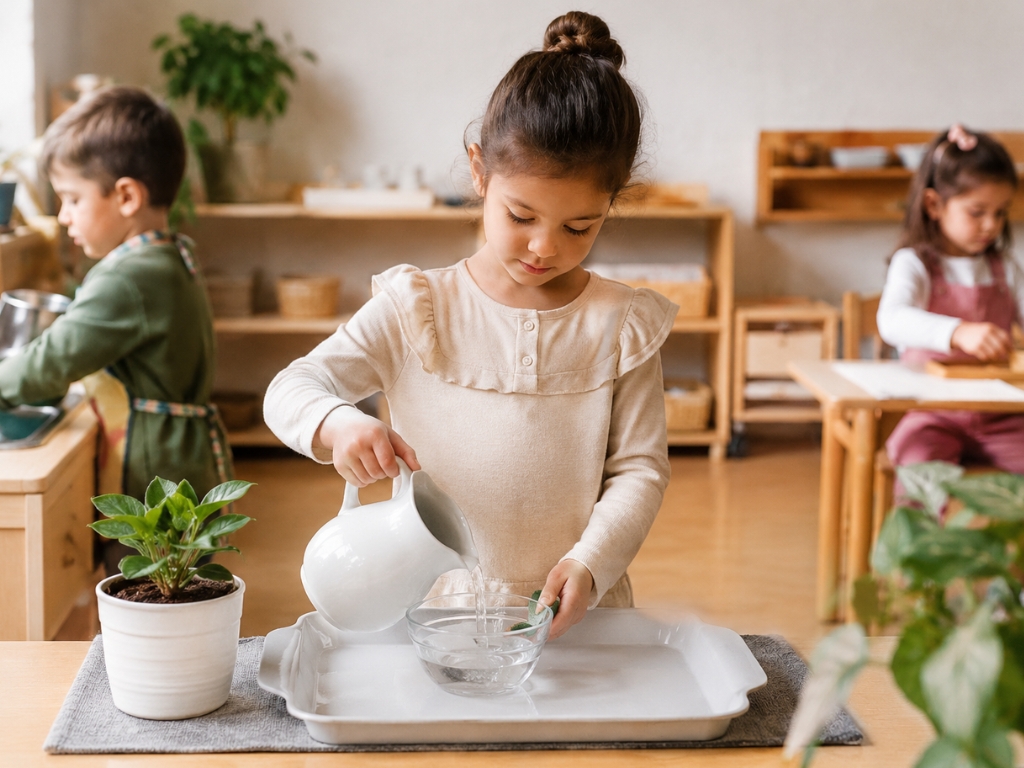

A Montessori classroom is designed to help children learn independently through hands-on exploration. Every item, from the furniture to the materials, has a purpose; and that is to encourage curiosity, focus, and confidence.
When you bring these ideas home, you don’t need a full classroom setup. You only need to create an environment where your child can explore freely and develop practical life skills.
Why Montessori Works So Well at Home
When children have freedom to choose, they learn responsibility. When they help with real tasks, they feel capable. And when their environment is calm and predictable, they can focus better.
Here’s what happens when you apply Montessori ideas at home:
- Your child learns to take care of their own needs.
- They begin to notice order and take pride in keeping things neat.
- You spend less time managing, and more time connecting.
- Everyday life becomes full of meaningful learning moments.
Start Small and Observe
You don’t have to redesign your whole house. Start with one corner: maybe a reading nook, a snack station, or an art shelf. Watch how your child interacts with it.
Do they return materials on their own? Do they stay focused longer? Those small observations will guide your next step.
The Montessori classroom is not just a place; it is also a mindset. When you bring its principles into your home, you help your child build confidence, independence, and a lifelong love of learning.
Discover more ways to build independence at home in our blog: Montessori Learning at Home: Simple Activities to Foster Independence.
Setting Up a Montessori Space at Home
The Montessori classroom is built around one simple idea: the environment should serve the child, not the other way around. At home, that means creating spaces where children can act independently, think clearly, and feel trusted.
Make Things Reachable
Accessibility is one of the core principles of Montessori design. When children can reach their clothes, books, and materials without help, they start managing small parts of their day on their own. This sense of control helps them build confidence and reduces frustration.
A reachable space tells a child, “I trust you to take care of yourself.” That message, repeated through daily experience, forms the foundation for independence.
Keep It Simple
Simplicity supports focus. Children concentrate better in uncluttered spaces because there’s less noise competing for attention.
In Montessori settings, fewer materials mean deeper engagement. When a child isn’t distracted by excess, they naturally spend more time exploring one task at a time.
This principle applies at home too. Rotating a small number of books, toys, or learning tools encourages renewed interest and appreciation. The goal isn’t to entertain but to invite thoughtful use of what’s available.
Include Real-Life Materials
Montessori education emphasizes real-world engagement over imitation. Using practical, real-life materials gives children experiences that connect directly to their environment. Instead of pretending to help, they actually help.
These moments teach coordination, patience, and attention to detail. They also make learning relevant. When children see that their actions have visible effects, they begin to value effort and precision.
Create Order
Order in the environment supports order in the mind. When children know where items belong, they internalize structure and predictability. This reduces stress and helps them transition smoothly between activities.
Montessori classrooms follow this principle closely; every item has a clear place, and children are responsible for returning it after use.
At home, the same approach helps build routine. Cleaning up becomes part of the activity, not a separate demand. Over time, this practice teaches responsibility without pressure.
Allow Freedom with Structure
Freedom doesn’t mean lack of limits; it means the freedom to act responsibly within clear boundaries. In Montessori philosophy, children are trusted to make choices, but those choices exist within a consistent framework.
At home, this might look like allowing your child to decide the order of their activities while maintaining expectations for timing or behavior. The structure gives stability; the freedom gives ownership.
This balance is what teaches real decision-making. When children experience autonomy supported by clear expectations, they learn self-control, respect, and accountability.
What to Include in Your Montessori Setup
You don’t need to spend a lot of money. Many Montessori-inspired tools can be made or repurposed from things you already own.
Try these ideas:
- Wooden blocks and puzzles for problem-solving.
- Sandpaper letters or tracing cards for early reading.
- Counting beads or pasta for number awareness.
- Real household tools like rags, pitchers, and sponges.
- A small mat or rug to define work and play areas.
The key isn’t having perfect materials; it’s giving your child meaningful ways to learn through touch, movement, and repetition.
How Parents and Teachers Can Work Together
Montessori learning is most effective when home and school work hand in hand. Teachers and parents can share what they observe and support each other in reinforcing the same skills.
Teachers can:
- Offer simple activities to try at home.
- Suggest ways to support focus and independence.
- Share what engages your child most at school.
Parents can:
- Talk with teachers about what works or doesn’t at home.
- Encourage the same habits, like cleaning up or choosing activities independently.
- Allow time for unstructured play and discovery.
When both sides work together, children get consistency. They know what to expect and thrive in both environments.
Creating a Montessori Home That Grows With Your Child
A Montessori-inspired home doesn’t need to be perfect, just intentional. Every small change you make helps your child build focus, confidence, and independence.
Start by watching how your child learns and interacts with their space. Then make simple adjustments that encourage responsibility and calm.
At Quality Interactive Preschool & Montessori, we support parents who want to extend Montessori learning at home. Contact us to learn how our programs can help your child grow with purpose in the classroom and beyond.