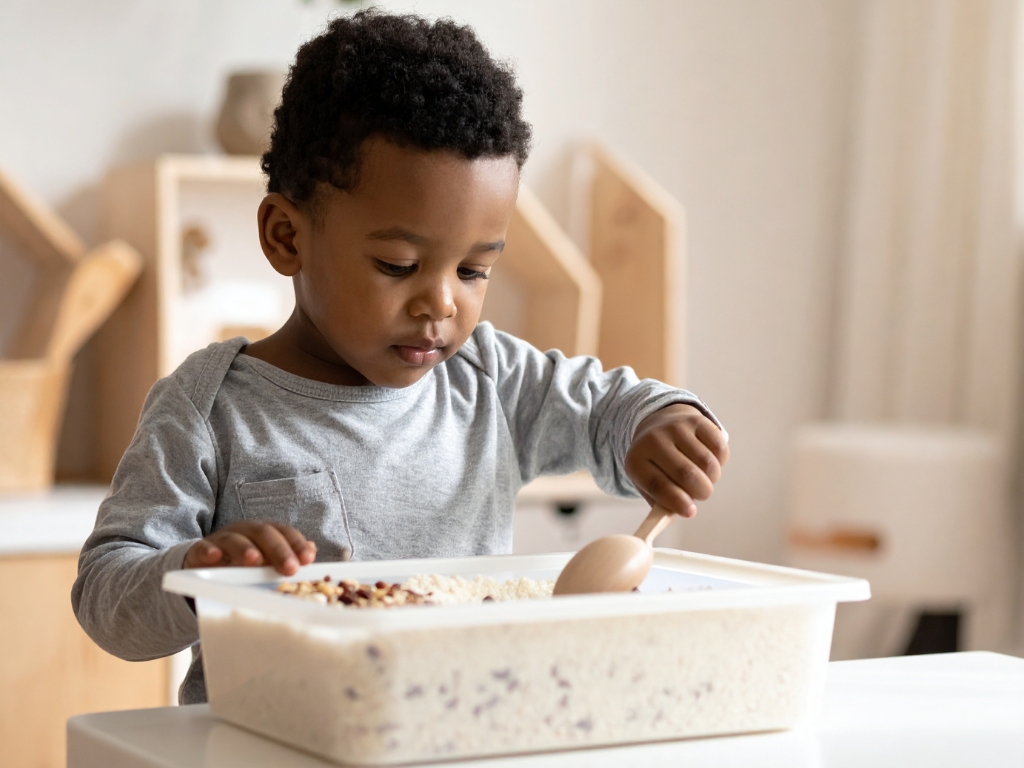
Every child understands the world in their own way. Some learn through listening and words, while others need to move, touch, and explore to make sense of new ideas. If your child learns best through hands-on experiences, like touching, smelling, seeing, and moving, they may be a sensory learner.
For these children, the Montessori curriculum offers an approach that feels natural and supportive. Here’s why this hands-on, experience-based method helps sensory learners thrive.
Learning Through Touch and Exploration
In a Montessori classroom, learning is never limited to a desk or a worksheet. Children use materials they can touch, move, and explore.
Instead of memorizing numbers, they count colorful beads. Instead of looking at letters, they trace sandpaper shapes while saying each sound. Even daily routines, such as pouring water, tying bows, sweeping floors, also teach balance, control, and focus.
For sensory learners, this kind of learning makes ideas real. They’re not just told how things work; they feel it.
A Calm Space That Feels Safe
Sensory learners often get overstimulated by loud sounds or busy spaces. Montessori classrooms are intentionally calm and organized. You’ll notice soft colors, quiet voices, and neatly arranged shelves. Everything has a place, and every material has a purpose.
This calm environment helps children stay centered. It gives them the focus they need to learn without the chaos that can make it hard to concentrate.
Movement Is Encouraged, Not Discouraged
In many traditional classrooms, sitting still is the rule. But for sensory learners, movement isn’t a distraction; it’s part of how they think and absorb information.
Montessori embraces that. Children move freely around the room, choosing where to work and what to work on. They walk carefully while carrying trays, balance on lines taped to the floor, or explore nature outside.
All that movement strengthens coordination and builds focus. It keeps the body and brain working together, just as they’re meant to.
Every Child Learns Differently (and That’s Respected)
Montessori teachers don’t expect every child to learn the same way. They observe quietly, learning what sparks each child’s curiosity and how they best absorb information.
If your child needs to touch textures to understand, they’ll have materials for that. If they need extra time to repeat a task, no one rushes them.
This approach removes pressure and comparison. It helps children feel confident, not because they’re perfect, but because they’re growing at their own pace.
Real-Life Skills Built Through the Senses
One of the most beautiful things about the Montessori curriculum is how it connects learning to real life.
Children cook, clean, water plants, and take care of their classroom. Each activity has sensory value, for instance, smelling herbs in the garden, feeling warm water while washing dishes, or listening to the quiet sound of sweeping.
These aren’t just chores; they’re lessons in focus, responsibility, and independence. Sensory learners especially benefit because every task engages their senses in meaningful ways.
Focus and Self-Regulation Grow Naturally
Sensory learners sometimes struggle with attention or managing how they react to sensory input. Montessori gives them tools to handle that.
The classroom has a steady rhythm: quiet moments, active work, and peaceful transitions. Teachers gently guide children to notice how they feel and what they need.
Over time, kids learn to pause, breathe, and refocus. That’s not just good for school — it’s a life skill they’ll use everywhere.
Building Confidence and Independence
In Montessori, children are trusted to take charge of their learning. They choose their activities, manage their space, and see the results of their effort.
For sensory learners, that sense of control is powerful. They can explore without constant correction, make mistakes safely, and discover success through persistence.
That’s how confidence grows, not from praise alone, but from realizing, “I can do this myself.”
Social Growth in a Supportive Community
Montessori classrooms combine independence with collaboration. Children often work side by side or help one another.
Older kids guide younger ones, and everyone learns how to respect personal space and share materials.
This balanced environment helps sensory learners build empathy, communication, and patience, which are essential social skills that come naturally when learning feels supportive instead of competitive.
Backed by Science
Research backs what Montessori teachers have practiced for over a century: multi-sensory learning works.
When children engage several senses at once — touching, seeing, hearing — their brains make stronger connections. They remember more, stay focused longer, and build problem-solving skills faster.
In other words, the Montessori method doesn’t just feel right for sensory learners; it’s scientifically effective.
Bringing Montessori Principles Home
You can easily support sensory learning outside the classroom, too. These small routines at home give your child the same sensory-rich learning they enjoy at school and show them that learning happens everywhere. You can try the following activities:
1. Cook Simple Recipes Together
Let your child pour, mix, measure, and taste. These steps build coordination, focus, and independence.
2. Set Up a Sensory Bin
Use rice, beans, sand, or water beads. Give scoops, cups, and spoons so your child can explore textures and movement.
3. Create a Small Practical-Life Station
Place a mini broom, dustpan, or spray bottle with water so your child can help clean. Real tasks build confidence.
4. Encourage Outdoor Exploration
Touch leaves, compare textures, listen to birds, or gather small rocks. Nature offers natural sensory input.
5. Offer Safe Pouring Activities
Use water or dry beans with pitchers or cups. Pouring strengthens control and concentration.
6. Rotate Toys and Materials
Keep only a few items out at a time. A less cluttered space helps your child focus and choose purposefully.
7. Add Simple Fine Motor Activities
Try threading beads, spooning pasta, or transferring objects with tongs. These tasks build precision and patience.
8. Build Quiet Time Into the Day
Give your child a cozy spot with books or soft materials. Calm moments help sensory learners reset.
9. Let Your Child Help With Routines
Folding towels, matching socks, watering plants, or setting the table turns chores into learning.
10. Create a Low Shelf for Independence
Place a few accessible activities your child can pick up and return on their own. Independence grows when choices are within reach.
Wrapping Up
If you want your child to learn in a space that understands their needs and supports their natural way of exploring, the Montessori curriculum offers a strong foundation. Sensory learners thrive when learning feels hands-on, calm, and meaningful and that’s exactly what this approach delivers.
If you’re ready to give your child an environment built for growth, focus, and confidence, schedule a visit to Quality Interactive Montessori Preschool. A quick tour can help you see how the Montessori method supports sensory learners every day.