Choosing the right books for a kindergartner can be challenging, especially when balancing independent reading, read-aloud stories, fun, and learning. The good news is that a well-rounded reading routine can make room for all of them.
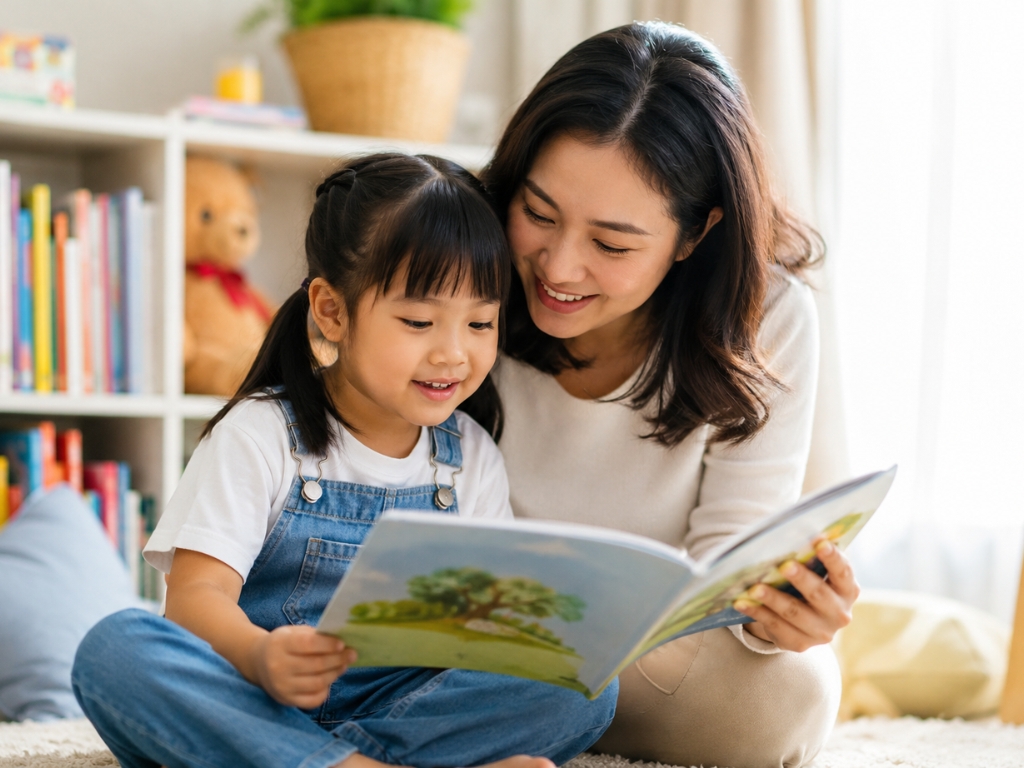
Research supports the value of sharing books with young children. A systematic review and meta-analysis of 19 randomized controlled trials involving 2,594 children ages one to six found that picture-book-sharing interventions had positive effects on expressive and receptive language development.
The best kindergarten books to read can introduce new words and ideas while giving children something equally important: a reason to look forward to the next story.
Which Book Is Best for Reading for Kindergarten?
There isn’t one book that’s best for every kindergartner. Children enter kindergarten with different interests, experiences, attention spans, and reading abilities.
Look for books with engaging illustrations, interesting but understandable vocabulary, memorable characters, and stories that encourage participation. Rhymes and repetition can invite children to join in, while humor and imaginative plots can help keep them interested.
It is also worth remembering that books read aloud don’t have to match a child’s independent reading level. Listening to a more complex story gives children an opportunity to enjoy language and ideas they may not yet be able to read by themselves.
A varied collection of kindergarten books to read can include classics, newer picture books, nonfiction, humorous stories, and even books without words.
15 Kindergarten Books to Read Together
Here are 15 titles that offer plenty of opportunities for enjoyment, curiosity, and conversation.
1. The Snowy Day by Ezra Jack Keats
Peter wakes up to discover that his neighborhood has been transformed by snow and heads outside to explore it. He makes footprints, creates tracks, builds a snowman, and experiences the simple excitement of a winter day.
The story’s familiar childhood perspective makes it approachable for young listeners. Parents can use it to talk about weather, observation, and sensory experiences, then ask children what they would do first on a snowy day.
2. Where the Wild Things Are by Maurice Sendak
After getting into trouble at home, Max imagines traveling to a distant land inhabited by the mysterious Wild Things. He becomes their king and enjoys a wild celebration before eventually deciding to return home.
Beyond its imaginative illustrations, the story gives children opportunities to think about anger, excitement, loneliness, and the comfort of home. Ask how Max’s feelings seem to change from the beginning of the story to the end.
3. The Very Hungry Caterpillar by Eric Carle
A tiny caterpillar eats his way through an increasingly large assortment of foods before eventually transforming into a butterfly.
Eric Carle’s distinctive collage illustrations, repetition, and predictable progression encourage children to follow along. The story also introduces concepts such as counting, sequencing, foods, days of the week, and the butterfly life cycle. After reading, children can try retelling the caterpillar’s journey in order.
4. Don’t Let the Pigeon Drive the Bus! by Mo Willems
When a bus driver leaves temporarily, readers receive one important instruction: don’t let the Pigeon drive the bus. The determined Pigeon then tries everything he can think of to change their minds.
Because the character talks directly to the audience, children become active participants instead of simply listening. The Pigeon’s increasingly dramatic arguments can also start conversations about persuasion, rules, responsibility, and why wanting something doesn’t always mean we should have it.
5. The Gruffalo by Julia Donaldson
A small mouse walking through the woods encounters several animals that would like to eat him. To escape, he invents a terrifying creature called the Gruffalo, only to discover that the creature actually exists. The mouse then has to think quickly again.
Rhyming language and repeated patterns make the story particularly engaging as a read-aloud, while the mouse’s clever solutions encourage prediction and problem-solving. Pause before major encounters and ask children what they think the mouse will do next.
6. Last Stop on Market Street by Matt de la Peña
CJ and his grandmother ride a city bus after church, and along the way CJ wonders why they don’t have some of the things other people have. His grandmother encourages him to look at their surroundings differently and appreciate the people, sounds, and beauty around them.
The story offers opportunities to discuss community, gratitude, perspective, and differences in people’s everyday lives. Children can also talk about interesting things they notice in their own neighborhoods.
7. The Day the Crayons Quit by Drew Daywalt
Duncan opens his box of crayons expecting to color, only to discover letters from crayons that have plenty of complaints. Some feel overworked, others overlooked, and several have very different opinions about how they should be used.
Presenting the story through letters introduces children to different voices and viewpoints in a humorous way. Ask which crayon has the most convincing complaint or invite children to imagine what another art supply might write in its own letter.
8. Dragons Love Tacos by Adam Rubin
This silly story establishes an important fact about dragons: they love tacos, but they definitely should not eat spicy salsa. Naturally, things don’t go entirely according to plan.
The absurd premise and escalating situation make the book entertaining for group or family read-alouds. It also gives children practice remembering an important detail and anticipating what could happen when it is forgotten. Before the turning point, ask children to predict what might go wrong.
9. The Rabbit Listened by Cori Doerrfeld
Taylor is upset after something carefully built comes crashing down. One by one, different animals arrive with their own ideas about what Taylor should do, from talking about the problem to becoming angry. Eventually, Rabbit simply stays close and listens.
The story provides an accessible way to explore disappointment and different responses to difficult feelings. Parents can ask what Taylor seemed to need most and discuss how they might support a friend who feels sad or frustrated.
10. The Book With No Pictures by B. J. Novak
As its title promises, this book contains no illustrations. Instead, its humor comes from the idea that the person reading aloud has to say every ridiculous word printed on the page. Nonsense sounds and unexpected phrases turn the adult reader into part of the entertainment.
For children accustomed to picture books, it can demonstrate that language itself can be playful. It can also inspire children to invent their own silly words and experiment with sounds.
11. The Lion & the Mouse by Jerry Pinkney
Jerry Pinkney retells the familiar Aesop fable primarily through detailed illustrations. A mouse is spared by a lion and later gets an opportunity to help the much larger animal when the lion becomes trapped.
Because there is very little written text, children must study the pictures to understand and explain what is happening. Encourage them to narrate individual scenes, identify clues in the illustrations, and predict how the mouse might help the lion.
12. We Don’t Eat Our Classmates by Ryan T. Higgins
Penelope Rex is excited about her first day of school until she discovers that her classmates are children and she finds them rather tempting to eat.
Her difficulty understanding how her behavior affects others creates an exaggerated and funny version of a familiar kindergarten challenge: learning how to get along with classmates. The story can prompt conversations about friendship, empathy, boundaries, and considering how another person might feel.
13. Creepy Carrots! by Aaron Reynolds
Jasper Rabbit loves eating carrots from Crackenhopper Field until he starts thinking the carrots are following him. Everyday settings become increasingly mysterious as Jasper tries to determine whether the creepy carrots are real or simply his imagination.
Suspenseful illustrations and humor give children clues they can examine as the story develops. Ask whether they believe Jasper, what evidence they notice, and whether the ending changes their interpretation.
14. What a Map Can Do by Gabrielle Balkan
This informational picture book introduces children to the purpose of maps through the perspective of a young raccoon exploring different places.
Children encounter ideas such as symbols, routes, scale, and different types of maps without needing a formal geography lesson. Including nonfiction among kindergarten books to read also demonstrates that books can answer questions about how the world works.
Extend the activity by helping children draw a simple map of their bedroom, classroom, playground, or route through the neighborhood.
15. Big by Vashti Harrison
Big follows a child whose experience changes as other people’s comments about her size begin affecting how she sees herself. Through expressive illustrations and carefully chosen language, the story explores how words can hurt and why people deserve to be treated thoughtfully.
For kindergarten-age children, it can provide a starting point for age-appropriate conversations about kindness, feelings, self-acceptance, and the impact our words can have on someone else. Ask children what they think the characters could have said or done differently.
How to Get More From Kindergarten Story Time
You don’t have to transform story time into a formal lesson to make it meaningful. Conversation can happen naturally.
Researchers from the University of Sussex examined 38 studies involving 2,455 children and found evidence that young children can learn words through shared storybook reading. Their meta-analysis also found that dialogic reading styles, where adults actively engage children during the story, were among the factors that influenced word learning.
Try pausing occasionally to explain an unfamiliar word, asking what might happen next, discussing an illustration, or connecting something in the book to your child’s experiences. Afterward, ask which part they liked best.
Most importantly, allow time simply to enjoy the story.
Why Reading the Same Book Again Is Okay
If your child requests the same story night after night, don’t worry about constantly replacing it with something new. Familiarity allows children to anticipate events, participate in repeated phrases, notice details, and talk more confidently about what happens.
You can also change your approach with each rereading. Enjoy the story the first time, explore illustrations the next time, and discuss characters or predictions later.
Encourage a Love of Learning at Small Miracles Education
Great books can turn everyday reading into opportunities for children to imagine, ask questions, discover new ideas, and enjoy learning. At Small Miracles Education, children are supported through engaging, age-appropriate experiences designed to encourage curiosity and development during the early years.
Looking for a nurturing learning environment for your child? Contact Small Miracles Education today to learn more about our early childhood education programs and how we help children build skills and confidence for their next steps in learning.
Build a Reading List Around Your Child
Treat these recommendations as inspiration rather than a checklist. A child fascinated by dinosaurs may happily choose dinosaur books for weeks, while another might prefer funny stories, animals, vehicles, or fairy tales.
Mixing those interests with fiction, informational texts, classics, and new discoveries can create a varied collection of kindergarten books to read without making reading feel like an assignment.
Ultimately, the goal isn’t to finish the greatest number of books. It’s to help children discover that books can be funny, comforting, surprising, fascinating, and worth returning to.
Choose one of these kindergarten books to read together, visit your local library, and ask your child a simple question: What story should we read next?