Most parents know exactly what they want: a child who listens, uses kind words, and doesn’t spend the whole day in power struggles.
The hard part is figuring out how to improve child behavior without turning into the parent who yells, threatens, or punishes all day. You tell yourself you’ll stay calm, then shoes go missing, there’s a meltdown at the door, and you hear your own voice getting louder than you planned.
If that sounds familiar, it doesn’t mean you’re doing everything wrong. It usually means you’re trying to manage behavior without a clear framework for why your preschooler acts this way or what actually changes it.
Preschool behavior is best understood as a set of developing skills and not a reflection of whether your child is “good” or “bad.” Once you see it that way, your role shifts from controlling to coaching, and things become more manageable for everyone.
Why is My Child So Badly Behaved at School?
This is the question that tends to hit the hardest.
You might get a note from the teacher or a quick “Can we talk?” at pickup. Your child is pushing, shouting, not following directions, or melting down more than others. At home, you see a different side and wonder what’s going on.
School is a high-demand environment for a preschooler. In a short morning, your child is expected to sit, listen, share, wait, switch activities, and solve social conflicts, all while managing noise, movement, and new situations. For many 3–5-year-olds, that’s a lot more than their nervous system can smoothly handle every time.
The behavior you see at school usually appears where the demands are higher, and support feels thinner. A child can hold it together at home, with one or two familiar adults, and then come apart in a busy classroom simply because the environment asks more of their developing skills.
Instead of thinking, “My child is badly behaved,” it’s more useful to ask, “Where does my child struggle the most, and what skill is missing in that situation?”
Ask the teacher specific questions:
- When does the behavior usually happen?
- What seems to trigger it?
- What helps in the moment?
Now you’re no longer guessing; you’re already collecting data. That’s exactly how you start building a consistent plan between home and school.
Why Yelling and Punishment Don’t Fix Behavior
Yelling does work in the short term. Your child stops, freezes, or cries. The behavior pauses because the brain has gone into a stress state.
But stressed brains don’t learn well. In that moment, your child is focused on your anger, not on the lesson you want them to remember. Over time, frequent yelling teaches them to avoid getting caught, shut down, or push back harder, not to develop self-control.
Punishment alone has a similar problem. Being sent away for long stretches, losing everything they care about, or hearing long, angry lectures might show your child that you’re upset, but it rarely answers the key question in their mind: “What should I do instead next time?”
If you truly want lasting change, success isn’t defined by “Did the behavior stop right now?” but by “Is my child learning a better way to handle this situation next time?”
The Mindset that Changes Behavior
Before you jump into strategies, you need one key shift in how you see your child. Most challenging behavior in preschoolers comes from three places:
- Skills that are still developing (like waiting, sharing, or handling “no”)
- Emotions that are too big for their current tools
- Environments that demand more than they can manage
When you understand that, you stop taking every outburst personally. You start looking for patterns instead of blaming personality.
This changes your role.
You’re not a referee handing out penalties. You’re a coach teaching skills and adjusting the “game,” so your child can succeed more often.
The steps below build on that mindset. They aren’t quick tricks. There are practical ways to help your child grow the emotional and behavioral skills they need — while keeping your relationship intact.
Using Clear, Concrete Expectations
A lot of preschool “misbehavior” is really confusion. Instructions like “Be good,” “Behave,” or “Stop it” are too vague. They don’t tell a young child what to do with their body, voice, or hands.
Preschoolers respond best to short, specific directions:
- “Walk inside.”
- “Hands to yourself.”
- “Toys stay on the table.”
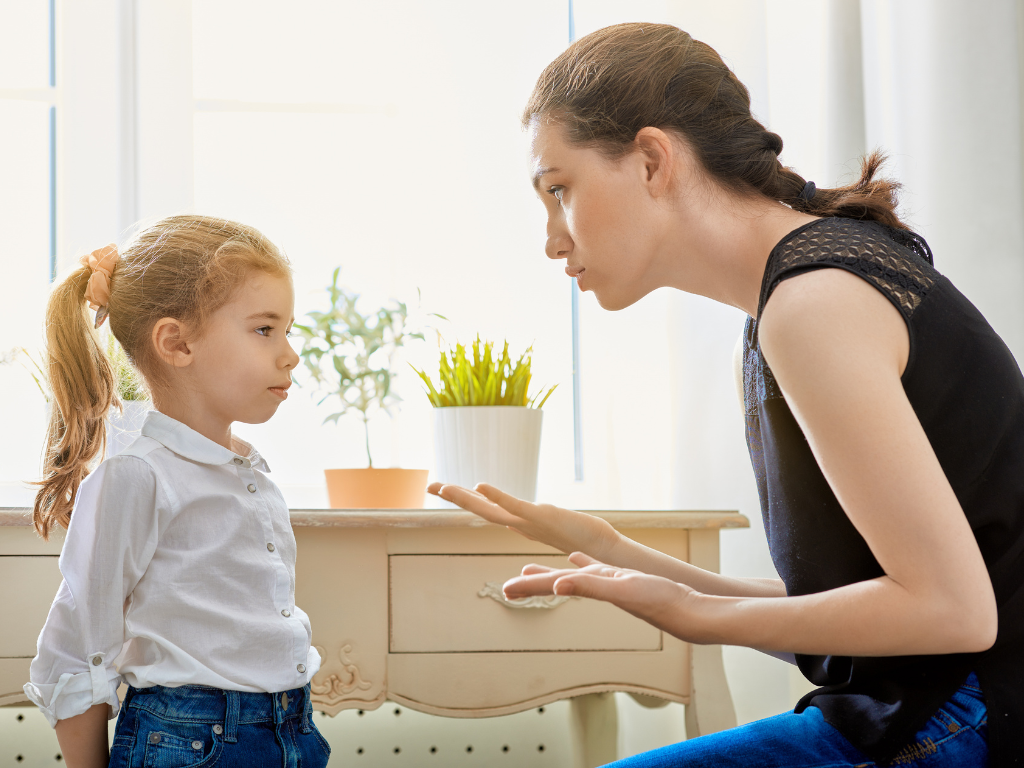
The way you deliver the instruction matters. Get close. Say their name. Get to eye level. Wait for them to look at you before you speak. Directions shouted from across the room or layered over chaos rarely land, and then it looks like defiance when it’s really missed communication.
Previewing also helps. Give simple warnings before transitions: “In five minutes, we’re turning off the TV and going to brush teeth.” A small heads-up can prevent a big meltdown because the brain has time to shift gears.
If you want a quick experiment, pick three behaviors that drive most of the chaos; for example, rough play, running indoors, and ignoring instructions. Rewrite your expectations as short do-statements and use them consistently for a couple of weeks. Many parents notice that resistance drops just from tightening up language and delivery.
Teaching Emotions Like You’d Teach New Words
Most challenging behavior is a feeling that doesn’t have words yet.
A child who hits is saying, “I’m overwhelmed,” with their body. A child who screams is saying, “I’m disappointed,” in the loudest way they can. If you want fewer explosions, you have to make feelings easier to express.
Here’s a simple, powerful sequence.
First, name what you see:
“Your face is tight, and your voice is loud. You’re really mad that he took your toy.”
Then, validate the feeling without approving the behavior:
“It makes sense to feel mad when that happens. I don’t like it either when someone takes my things.”
Finally, coach a replacement:
“We don’t hit. Next time, say, ‘I’m using that’ or ‘I want it back.’ Let’s practice saying it now.”
This isn’t just “being nice.” Naming emotions and offering alternatives helps calm the nervous system and builds a mental library of responses your child can eventually use on their own. That’s the heart of improving behavior from the inside out.
Using Logical Consequences
Consequences have a role, but they should teach, not humiliate. A helpful consequence is:
- Directly connected to the behavior
- Calmly delivered
- Realistic to repeat
If your child throws a toy after a clear warning, that toy is put away for the rest of the day. If they deliberately spill water, they help clean it up. You’re not attacking their character; you’re linking actions and outcomes.
The tone is what separates discipline from punishment. A short, calm statement, such as “You chose to throw the toy, so the toy is put away,” does more to build self-control than a five-minute lecture.
Alongside consequences, keep the connection strong. Daily one-on-one time, even 10 focused minutes, reduces attention-seeking behavior because your child doesn’t have to use conflict to feel noticed. When your child feels securely connected, they’re more open to your guidance.
Bringing It All Together
When you think about how to improve child behavior, there isn’t one magic trick or chart that fixes everything.
Real change comes from a mix of clear, simple expectations your child can follow, consistent emotional coaching that helps them put feelings into words, logical and respectful consequences that link actions to results, and a steady, warm connection so they feel safe enough to listen and cooperate.
If you’re looking for a preschool partner that supports this kind of growth, Outer Limits School is here to walk alongside you. Contact us today to schedule a visit or speak with our staff about your child’s needs.