Many parents have noticed how quickly children move from one video, app, or activity to the next. While technology offers valuable learning opportunities, too much fast-paced screen time can make it difficult for young children to slow down and fully engage with the world around them.
A Montessori school addresses this challenge through hands-on learning, uninterrupted work periods, and a carefully prepared environment that encourages children to focus deeply and learn with purpose.
Why Is It Becoming Harder for Children to Focus?
Children’s ability to concentrate develops gradually through practice, but many aspects of modern life make that more challenging. Digital media is designed to capture attention with bright visuals, rapid scene changes, instant feedback, and endless new content.
While these features make screens highly engaging, they also encourage children to switch their attention frequently instead of staying focused on one meaningful task.
Outside of screen time, busy schedules and constant interruptions can further limit opportunities for deep concentration.
Several everyday habits can contribute to shorter attention spans:
- Fast-paced digital content: Short videos, games, and apps encourage children to expect constant stimulation and immediate rewards.
- Frequent interruptions: Notifications, background television, and switching between activities make it difficult to stay engaged with one task.
- Less independent play: When children have fewer opportunities to play creatively on their own, they miss valuable practice in sustaining focus.
- Limited problem-solving opportunities: Solving challenges independently strengthens concentration, but constantly stepping in to help can reduce these learning moments.
- Overstimulating environments: Busy, noisy, or cluttered surroundings can compete for children’s attention and make focusing more difficult.
These challenges make it even more important to intentionally create opportunities for focused learning. According to the Pediatric Clinics of North America, only 35.6% of children aged 2 to 5 worldwide meet the recommendation of no more than one hour of sedentary screen time per day, meaning many young children spend more time with screens than health experts recommend.
Balancing technology with purposeful, hands-on experiences can help children strengthen the concentration skills they need for lifelong learning.
What Is a Healthy Screen Time for a Child?
Health experts generally recommend avoiding screen media for children younger than 18 to 24 months, except for video chatting, because infants and toddlers learn best through face-to-face interactions and hands-on exploration. Talking, playing, and responding to caregivers help build language, social, and cognitive skills in ways that screens cannot.
For children ages 2 to 5, the Mayo Clinic cites the American Academy of Pediatrics’ recommendation of limiting recreational screen time to about one hour per day of high-quality programming, ideally with a parent or caregiver who can help children understand and apply what they are watching.
This balanced approach allows children to benefit from educational content while ensuring they have plenty of time for active play, reading, creative activities, and real-world experiences that support healthy brain development, attention, and social-emotional growth.
How a Montessori School Naturally Builds Concentration
Unlike classrooms that rely heavily on teacher-led instruction, a Montessori school creates daily opportunities for children to practice focusing independently. Every part of the environment is carefully designed to support concentration.
1 | Long, Uninterrupted Work Periods
One of the defining features of a Montessori school is the uninterrupted work cycle. Instead of switching activities every few minutes, children are given extended periods to explore materials at their own pace.
This uninterrupted time allows children to become fully absorbed in their work. As they repeat activities, solve problems, and refine their skills, they gradually build the ability to concentrate for longer periods.
2 | Hands-On Learning Keeps Children Engaged
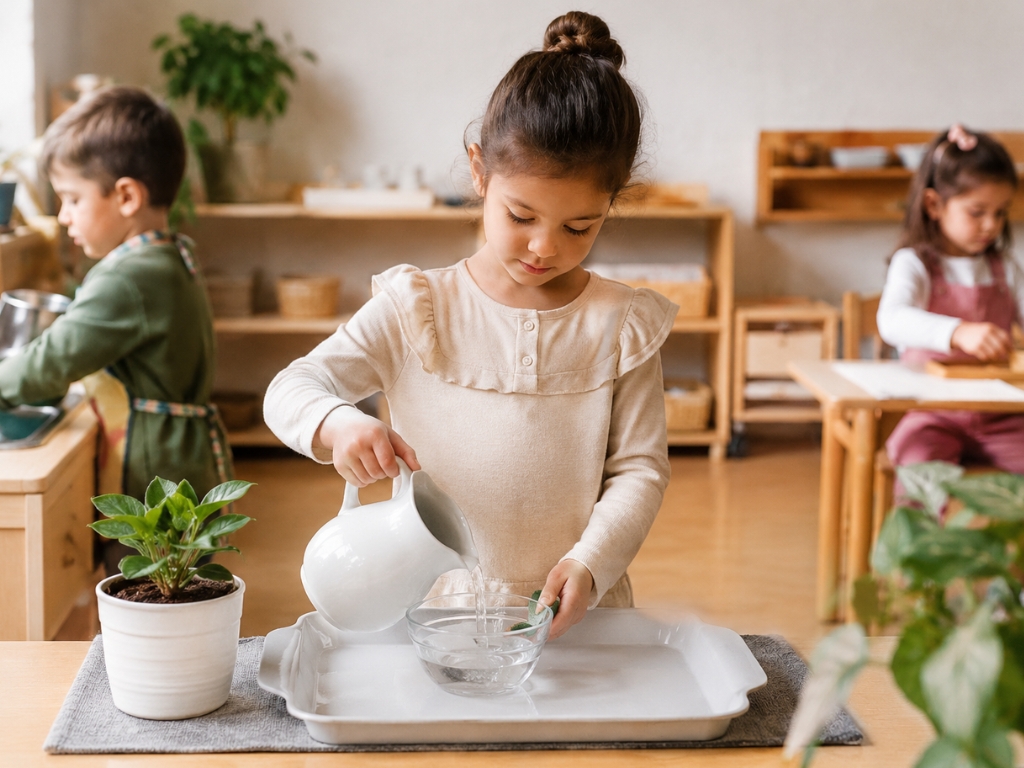
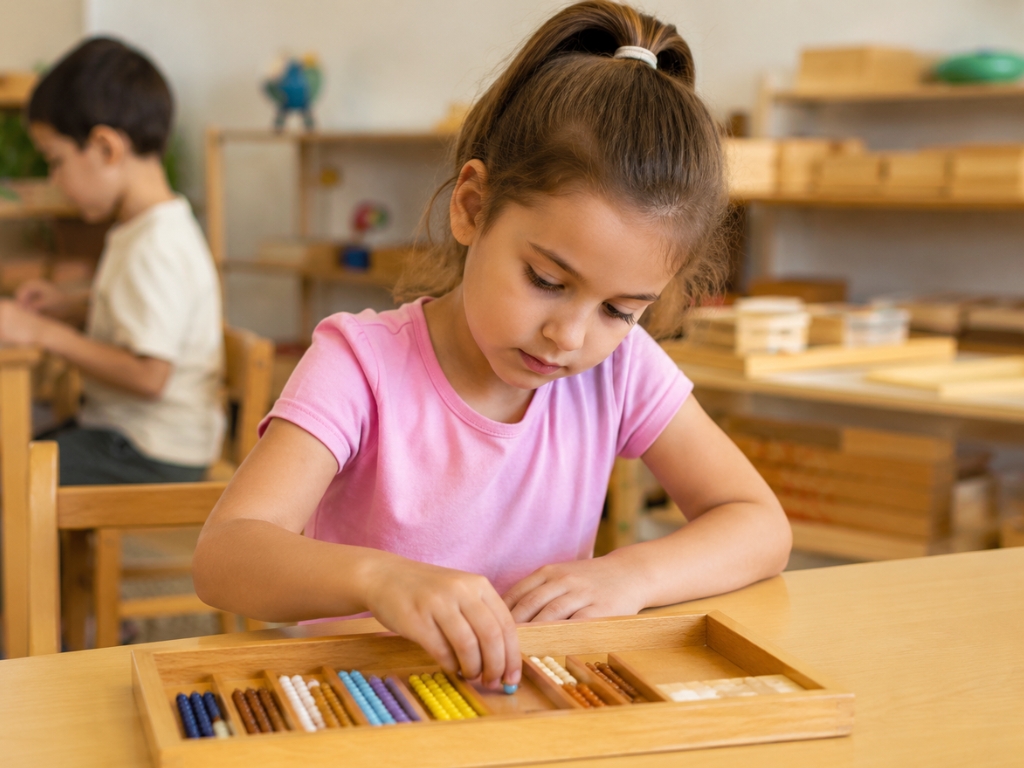
Children naturally learn best by doing. Rather than watching information on a screen, Montessori students work with carefully designed materials they can touch, manipulate, and explore.
Whether pouring water, matching objects, building number concepts, or tracing letters, these sensory experiences require active participation. Because children are fully involved in the learning process, they remain engaged while strengthening both their understanding and their attention span.
3 | Children Choose Purposeful Work
Choice plays an important role in maintaining focus. In a Montessori school, children are free to choose from activities that have already been introduced by their teacher.
Having ownership over their work increases motivation. Instead of completing assignments simply because they are told to, children often remain focused because they are genuinely interested in what they are learning. This sense of purpose encourages longer periods of concentration.
4 | Calm Classrooms Reduce Distractions
The physical environment also supports attention. Montessori classrooms are organised, orderly, and intentionally uncluttered. Learning materials are displayed neatly, routines remain consistent, and unnecessary distractions are kept to a minimum.
This calm atmosphere helps children direct their energy toward meaningful work instead of competing for their attention. A peaceful classroom allows children to settle into activities more naturally and remain engaged for longer periods.
5 | Teachers Observe Before They Intervene
Montessori teachers understand that concentration is valuable. Instead of interrupting children as soon as they encounter a challenge, educators carefully observe before offering assistance.
By allowing children time to think, experiment, and solve problems independently, teachers protect valuable moments of deep concentration. Guidance is provided when needed, but children remain active participants in their own learning rather than passive recipients of answers.
6 | Mixed-Age Classrooms Encourage Meaningful Learning
A Montessori school typically groups children of different ages together, allowing younger students to learn by observing older peers while giving older children opportunities to reinforce their own knowledge by helping others.
This collaborative environment keeps children engaged because learning happens naturally through observation, discussion, and peer interaction. Rather than competing with classmates, children remain focused on developing their own skills at a pace that suits them.
7 | Activities Match Each Child’s Development
Montessori teachers carefully introduce lessons based on each child’s readiness rather than expecting every student to complete the same activity at the same time. This individualised approach helps ensure that tasks are challenging enough to be engaging without becoming overwhelming.
When activities are appropriately matched to a child’s abilities, children are more likely to experience success, remain motivated, and stay focused until the work is complete.
Helping Children Build Lifelong Focus
Screens will continue to be part of children’s lives, but they do not have to define how children learn. A thoughtfully designed Montessori school gives children daily opportunities to strengthen concentration through purposeful work, hands-on learning, independence, and carefully guided instruction.
If you’re looking for a preschool that nurtures your child’s ability to learn with purpose, contact Quality Interactive Preschool & Montessori today to learn more about our programs or schedule a tour to experience our Montessori classrooms firsthand.