Many parents want to support their child’s reading development but struggle to find extra time for structured learning. The good news is that preschoolers do not need long lessons or expensive tools to build early literacy skills.
Some of the best literacy activities for preschoolers happen during everyday routines. Simple conversations, songs, storytelling, and playful interactions help children build vocabulary, communication, and reading confidence over time.
Here is how you can turn daily routines into meaningful literacy activities at home.
What Are Literacy Activities for Children?
Literacy activities help children develop the foundation for reading, writing, speaking, and communication. These activities introduce preschoolers to language in engaging and age-appropriate ways long before they begin reading independently.
Common literacy activities for children include:
- Singing rhyming songs
- Listening to stories
- Identifying letters and sounds
- Looking at picture books
- Answering questions
- Telling simple stories
- Recognizing words in everyday environments
Early literacy development begins during daily interactions. According to the National Institute for Literacy, children exposed to language-rich environments before age five are more likely to build stronger reading skills later in school. The American Academy of Pediatrics also reports that children who participate in regular reading activities from infancy often develop larger vocabularies and stronger communication skills by age three.
This is why everyday conversations matter more than many parents realize.
Why Everyday Routines Work So Well
Preschoolers learn best through repetition, interaction, and real-life experiences. They absorb language naturally when learning feels playful instead of forced.
That is why literacy activities for preschoolers do not need to resemble classroom lessons.
A short conversation during breakfast or a rhyming game at bath time often keeps a child more engaged than a long worksheet session.
Daily routines also create consistency. Children hear the same words, phrases, and sounds repeatedly, which helps improve memory, comprehension, and language development.
Just as importantly, these activities reduce pressure. Many preschoolers lose interest when learning feels overly structured. Everyday literacy moments feel natural because they are woven into activities children already enjoy.
Morning Routines
Morning routines create simple opportunities to build literacy skills before the day begins. Small conversations and daily habits can help preschoolers strengthen vocabulary, comprehension, and communication naturally.
Build Vocabulary While Getting Dressed
Talking through clothing choices helps children learn new descriptive words and improve language development.
You can say:
“Do you want the blue shirt or the red shirt?”
“Your sweater feels soft.”
“Can you find your striped socks?”
Describing colors, textures, and clothing items helps expand vocabulary during normal routines.
Practice Sequencing Skills
Morning routines also help preschoolers understand order and sequencing. Asking simple questions encourages listening and comprehension skills.
Try questions like:
“What do we do first?”
“What comes after brushing teeth?”
“What should we pack next?”
These conversations help children understand routines while strengthening communication skills.
Read Everyday Words Together
Breakfast time can easily become a literacy activity. Point out letters and words on cereal boxes, juice containers, or snack packaging. Even recognizing familiar logos helps children connect symbols with meaning.
Grocery Shopping
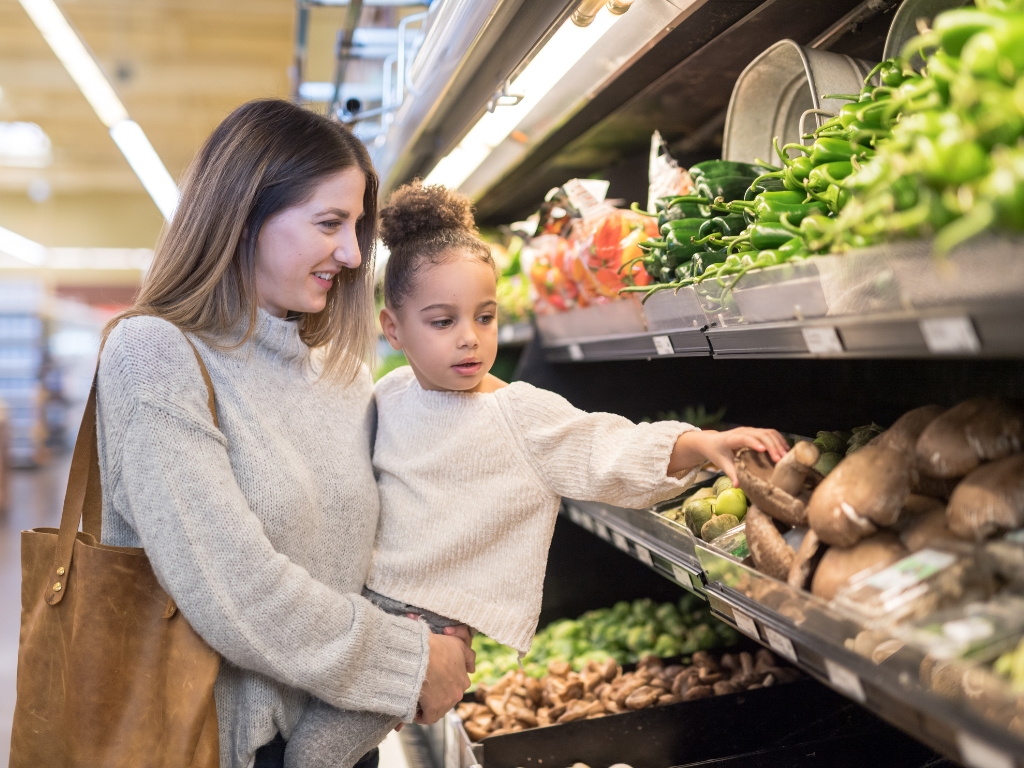
A grocery trip can easily become one of the most engaging literacy activities for preschoolers. Everyday signs, labels, and conversations help children build vocabulary and early reading skills in a real-world setting.
Turn Shopping Lists Into Reading Practice
Shopping lists give preschoolers a fun way to recognize letters, words, and objects while helping with errands. Try saying:
“Milk starts with M.”
“Can you find bananas?”
“Which item starts with the letter A?”
You can also use picture-based shopping lists to help younger children connect words with everyday items.
Encourage Conversation During Shopping
Simple conversations during grocery shopping help children strengthen communication and observation skills. Ask questions like:
“What should we make for dinner tonight?”
“Which fruit looks the biggest?”
“Can you find something green?”
These discussions encourage critical thinking while expanding vocabulary naturally.
Point Out Everyday Words and Signs
Grocery stores are filled with words, labels, and symbols children see regularly. Recognizing familiar signs helps preschoolers connect words with meaning.
Point out everyday words and symbols as you move through the store. Show your child store signs, food labels, brand logos, price tags, and large printed letters on packaging or displays.
These familiar visuals help preschoolers recognize letters and connect words with real objects and experiences. Over time, repeated exposure builds word recognition and early reading confidence naturally.
These small interactions help children become more comfortable recognizing words in everyday environments.
Use Environmental Print
Store signs, food labels, and logos expose children to words in real-world settings. Recognizing familiar signs helps build word awareness and reading confidence.
Research from Harvard’s Center on the Developing Child shows that conversational interaction supports brain development connected to language and literacy skills. A study published in Pediatrics also found that children exposed to frequent parent-child verbal interaction often develop stronger vocabularies and comprehension abilities.
Mealtime
Mealtime creates a relaxed space for conversation and learning. Simple discussions at the table can help preschoolers build vocabulary, listening skills, and communication naturally.
Describe Food Together
Talking about food characteristics helps children hear and understand new descriptive words during everyday routines.
Talk about the colors, shapes, temperatures, textures, and flavors of different foods during meals. These simple descriptions help preschoolers hear new vocabulary words while connecting language to real experiences they can see, touch, and taste.
For example:
“The apple feels crunchy.”
“The soup is warm.”
“Your pasta looks curly.”
These small conversations help preschoolers connect words with real experiences and objects.
Practice Rhyming and Letter Sounds
Rhyming games help children recognize sound patterns, which supports early reading development and phonemic awareness. These simple activities help children hear how words and sounds connect. You can try:
“Peas” and “cheese”
“Rice” and “nice”
“Bread” and “red”
You can also focus on beginning sounds during meals. For example:
“Milk starts with M.”
“Banana starts with B.”
Encourage Storytelling
Open-ended questions during meals encourage preschoolers to think, communicate, and build sentence structure. Ask questions like:
“What was your favorite part of today?”
“What should happen next in our pretend story?”
“What made you laugh today?”
Storytelling activities help strengthen imagination, communication, and conversation skills over time.
Bath Time
Bath time naturally encourages creativity, conversation, and play. These relaxed moments create simple opportunities for literacy learning without feeling like structured lessons.
Use Foam Letters and Bath Toys
Foam alphabet letters and bath toys give preschoolers a hands-on way to explore letters, sounds, and words during bath time. You can ask your child to identify letters, match letters with sounds, practice simple spelling, or name different bath toys and objects in the tub.
These playful activities help children stay engaged while building early literacy skills naturally through repetition and interaction.
Sing Songs and Nursery Rhymes
Songs and nursery rhymes help preschoolers recognize sound patterns while improving memory and language development. Singing familiar alphabet songs, rhyming nursery rhymes, counting songs, or repetitive action songs during bath time encourages children to hear how words and sounds connect.
Repeating these songs regularly also strengthens phonemic awareness, which supports future reading skills.
Create Stories With Bath Toys
Bath toys, animals, and action figures can easily turn bath time into a storytelling activity. Encourage your child to create simple pretend stories about where the toys are going, what happens next, or who the main character might be.
Asking questions like “Where is the boat going?” or “Who is the hero in the story?” helps preschoolers build vocabulary, imagination, and sentence-building skills through conversation and creative play.
Bedtime Routines
Bedtime remains one of the most valuable opportunities for literacy development. Reading and storytelling before bed help preschoolers strengthen listening, comprehension, and communication skills in a calm environment.
Make Storytime Interactive
Instead of reading straight through a book, pause occasionally to ask questions and encourage participation. Ask questions like:
“What do you think happens next?”
“How does the character feel?”
“What do you notice in this picture?”
Interactive reading keeps children engaged while improving comprehension and critical thinking skills.
Repeat Favorite Books
Many preschoolers ask to hear the same story repeatedly. While it may seem repetitive to parents, rereading familiar books helps children improve memory, confidence, and understanding of language patterns.
Children often notice new words, details, and story elements each time they hear a favorite book.
Encourage Story Retelling
After reading together, ask your child to explain the story in their own words. Retelling helps preschoolers strengthen sequencing, listening, and communication skills.
You can ask:
“What happened first?”
“Who was your favorite character?”
“What was the ending?”
These simple discussions help children build confidence while practicing storytelling skills.
Make Literacy Part of Everyday Life
You do not need complicated lessons to support your child’s literacy development. Simple daily habits like reading together, asking questions, singing songs, and having conversations can help preschoolers build strong language and reading skills over time.
The everyday routines you already share with your child can become meaningful literacy activities for preschoolers. To learn more about early childhood education and literacy development, contact Small Miracles Education today.