Children need more than academics to thrive. Independence, responsibility, concentration, and problem-solving are everyday abilities that help them become increasingly capable in the world around them.
At a Montessori school in Arizona, children can practice these skills through purposeful Practical Life activities woven into the school day. The American Montessori Society explains that activities such as food preparation, cleaning, personal care, and dressing help young children develop order, coordination, concentration, and independence.
So, what do these important life skills look like in practice?
What Are Some Important Life Skills for Children?
Important life skills for children include self-care, communication, responsibility, problem-solving, organization, concentration, and self-control. Children develop these abilities gradually through repeated practice, appropriate guidance, and opportunities to participate in everyday routines.
At a Montessori school in Arizona, many of these opportunities fall within an area of the Montessori curriculum called Practical Life. Activities may involve caring for oneself, maintaining the classroom environment, practicing coordinated movements, and learning Grace and Courtesy.
Here are seven examples of life skills children can practice through these experiences.
1. Taking Care of Themselves
Young children often want to do things independently, even when those tasks take longer than they would with adult assistance.
Montessori environments create opportunities to practice age-appropriate self-care, such as washing hands, fastening clothing, preparing a simple snack, or putting away personal belongings. Teachers can demonstrate how a task is completed and then allow children to practice it themselves.
Over time, these experiences encourage children to become more active participants in their daily routines.
2. Caring for Their Environment
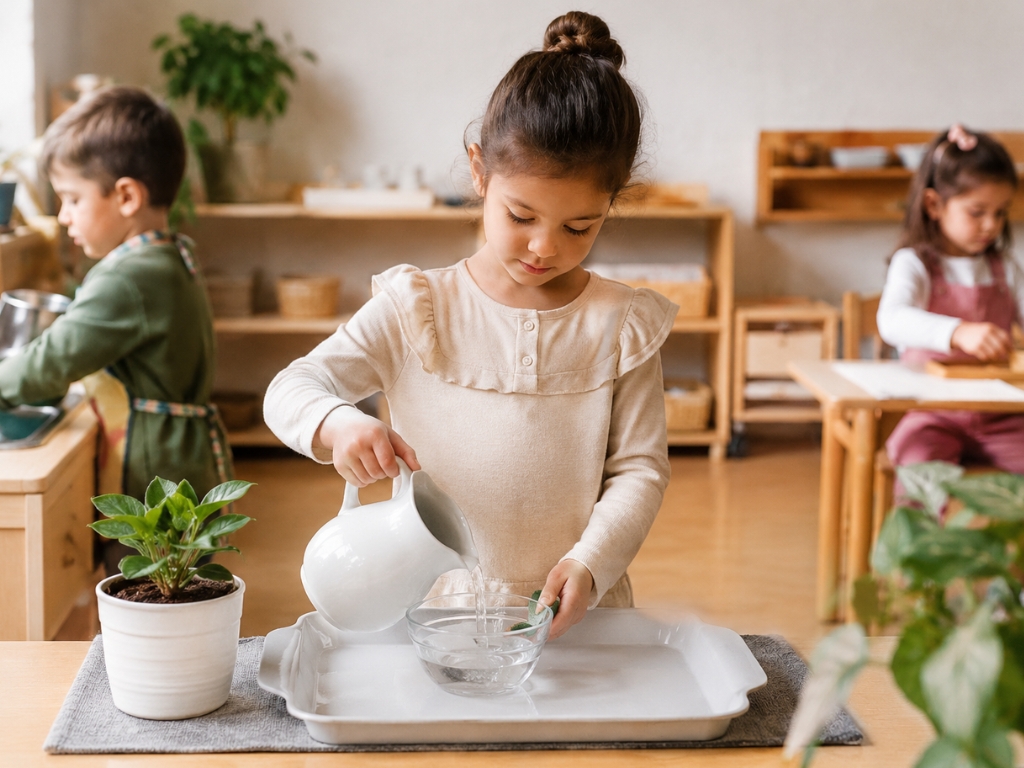
Sweeping crumbs, wiping a table, watering a plant, or cleaning a small spill may seem like ordinary chores. In Montessori education, however, these are purposeful learning experiences.
Children can see that their actions make a difference to a shared space. At the same time, they practice coordination, sequencing, order, and responsibility.
A Montessori school in Arizona may therefore treat caring for the classroom as part of learning rather than something adults always handle for children.
3. Concentrating and Completing Tasks
Many Practical Life activities involve a clear series of steps.
Consider washing a table. A child may need to gather supplies, prepare the work area, wash the surface, dry it, handle any spilled water, and return the supplies afterward.
Following an activity from beginning to end gives children repeated opportunities to focus, remember what comes next, and persist until their work is complete.
4. Taking Responsibility
Responsibility becomes easier to understand when children experience it in concrete ways. Instead of simply being told to “be responsible,” children might:
- Return classroom materials to their proper places
- Clean up after themselves
- Put away personal belongings
- Prepare a workspace for the next person
These small responsibilities help demonstrate that individual choices can affect other people and the larger classroom community.
5. Communicating With Grace and Courtesy
Montessori education also emphasizes grace and courtesy, which provides opportunities to practice respectful social interactions.
Children might learn how to greet someone, wait for a turn, ask for assistance, say “please” and “thank you,” or avoid interrupting someone who is concentrating.
Research offers an interesting perspective on this area. A three-year longitudinal study followed 141 children ages three to six, including 70 children in Montessori programs and 71 attending other schools. Researchers reported greater growth in social understanding among the Montessori children over the preschool years.²
At a Montessori school in Arizona, these everyday interactions can give children regular opportunities to practice communicating respectfully with others.
6. Solving Everyday Problems
Not every small challenge requires an adult to immediately provide the solution.
A child might pour too much water, discover that materials do not fit where expected, struggle with a zipper, or realize that an activity was completed in the wrong sequence. With appropriate support, these moments can become opportunities to assess what happened and try another approach.
Teachers can step in when necessary while still giving children room to work through manageable challenges. This approach provides practice with persistence, flexibility, and problem-solving.
7. Practicing Self-Control
Everyday classroom life presents many situations that require self-control.
Children may need to wait until a material becomes available, carry an object carefully, remember several steps, control their movements around classmates, or stay focused despite distractions.
Repeated experiences like these provide practical opportunities to exercise abilities associated with executive function, including working memory, inhibitory control, and cognitive flexibility.
Why Everyday Activities Matter for Developing Life Skills
One Practical Life activity can involve several skills at once. Preparing a snack, for example, might require coordination, sequencing, concentration, independence, cleanup, and consideration for others.
That is part of what makes these seemingly simple activities meaningful. Children are not just completing isolated exercises; they are practicing abilities that can also be useful at home and in their communities.
Parents can encourage similar development by giving children manageable household responsibilities, keeping appropriate belongings within reach, demonstrating tasks clearly, and allowing enough time for children to attempt familiar activities independently.
Building Skills for Life Through Montessori Education
Self-care, responsibility, concentration, communication, problem-solving, environmental care, and self-control are skills that develop through experience.
A Montessori school in Arizona can create consistent opportunities for children to practice these abilities through meaningful activities alongside their academic learning. Small tasks such as cleaning a spill or putting materials away may look simple, but they give children a chance to participate more actively in their own daily lives.
For parents exploring Montessori education, consider visiting Quality Interactive Preschool and Montessori and asking how Practical Life activities are incorporated into the daily routine. You might also ask yourself: What everyday task could your child begin taking greater responsibility for today?